Booking choice: The jeep tour with hotel pickup, from $112 per person. Check dates Tour details
Between 1497 and 1521 Michelangelo came to Carrara again and again: for the Pietà, for the tomb of Pope Julius II, for the Medici in Florence. He chose blocks at the quarry face, signed contracts with local quarrymen and rented a house on the cathedral square.
The dates below come from the Carrara Marble Tour history pages and the research collected by Galleria Bazzanti, with the David story from the 2005 CNR study.
The quick answer
He valued Carrara marble above any other stone, and from 1497 he came in person to choose flawless blocks. The Pietà block came from Polvaccio in the Torano basin; the David was carved from a Fantiscritti block first quarried in 1465 for another sculptor. His house on Piazza Duomo carries a plaque. The CARMI museum has announced a temporary closure, so check before you go.
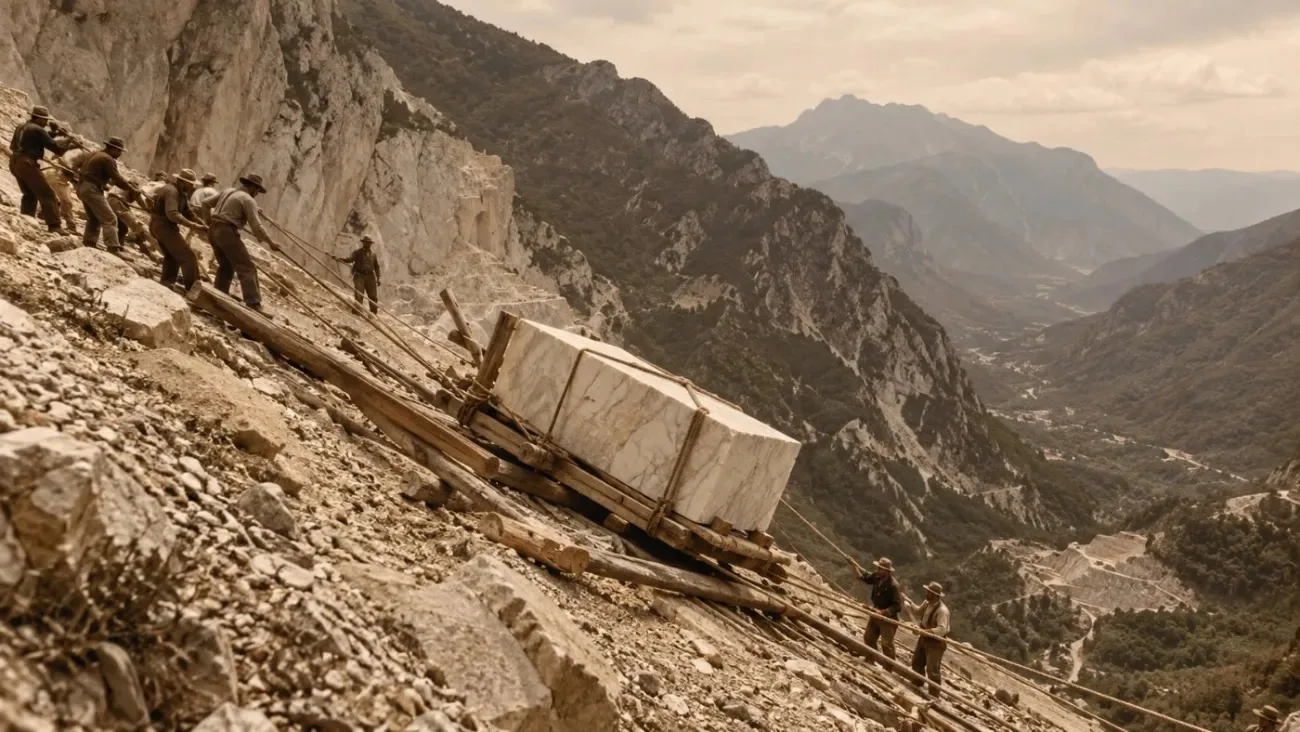
Why did Michelangelo use Carrara marble?
Because the best white Carrara stone is fine-grained, even and takes detail like nothing else he knew. He trusted no one else to choose it.
Michelangelo valued Carrara marble above all other stone, except perhaps that of his own later quarry at Pietrasanta, Wikipedia notes. The pure white statuario grade holds a fine edge, polishes to a glow and lets light into the surface. A hidden crack or a dark vein could ruin a figure after months of work, which is why he went to the quarry himself.
His 1505 contracts set the bar plainly: white marble, no cracks, no veins. The Romans had already proved the stone at scale, shipping it from the port of Luni for the Pantheon and Trajan's Column. Our guide to Carrara, Calacatta and Statuario explains the grades.
When did Michelangelo visit Carrara?
At least five times, from autumn 1497 to 1521, with long stays in 1505 and 1516 to 1517.
The visits, as the Carrara Marble Tour lists them:
| When | Why | What came of it |
|---|---|---|
| Autumn 1497, aged 22 | Marble for the Pietà | Block from Polvaccio, Torano basin |
| 1503 | Apostles for Florence cathedral | Only Saint Matthew was begun |
| Spring to autumn 1505 | Tomb of Julius II | Eight months rough-hewing; the Moses is Apuan marble |
| Sep 1516 to Aug 1517 | Medici commissions | Rented a house on the cathedral square |
| 1519 to 1521 | San Lorenzo, New Sacristy | 1521 was his last visit in person |
After 1521 he sent an assistant known as Topolino in his place and dealt with Carrara by letter until about 1525. Galleria Bazzanti adds a detail you can picture: in 1497 he arrived on a grey horse and rented rooms from Francesco Pelliccia, the quarryman who worked Polvaccio.
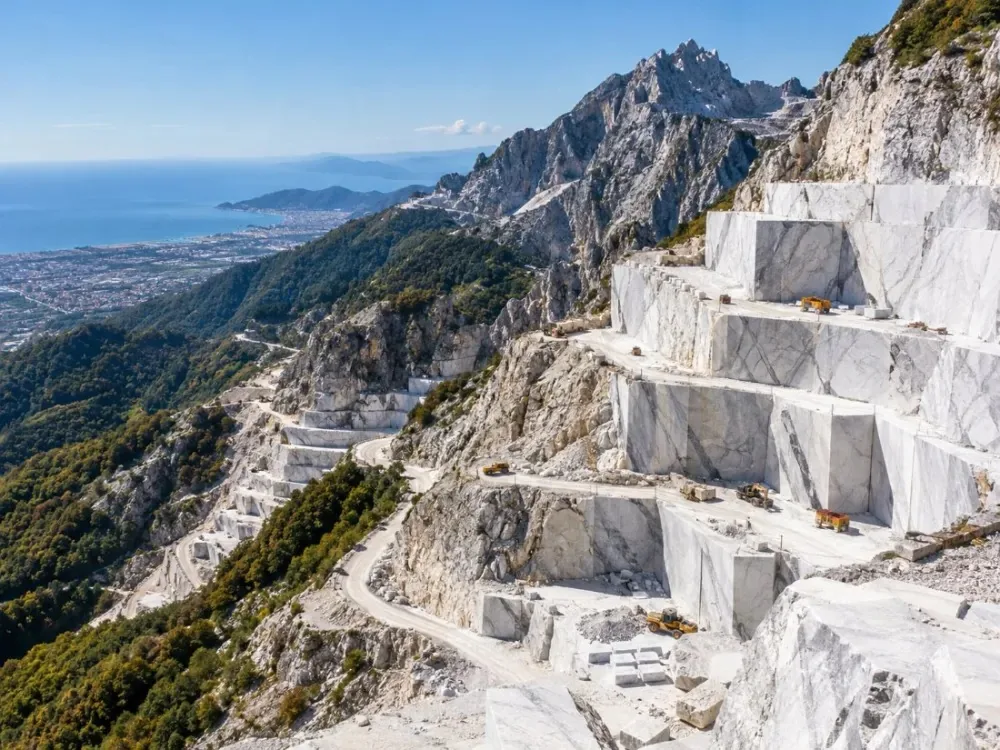
Which quarry did the Pietà come from?
Polvaccio, in the Torano basin above Carrara. Michelangelo bought the block there in the winter of 1497 to 1498.
The Pietà was commissioned by the French cardinal Jean de Bilhères-Lagraulas. Michelangelo picked the stone at Polvaccio, paid for a cart in February 1498, and waited. The blocks were late. The cardinal had to write to the Marquis of Massa and to Florence before they reached Rome in early summer. The contract was signed in August 1498 for 450 gold ducats.
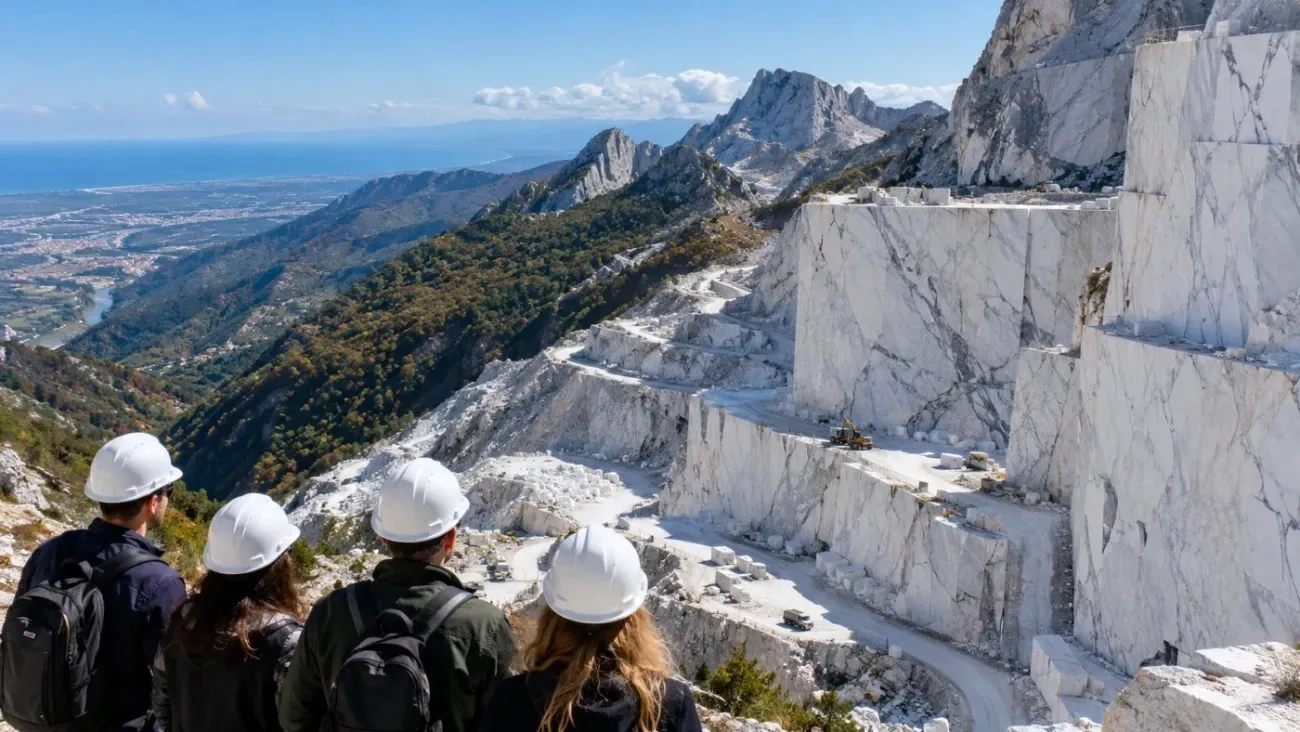
Polvaccio is still the area guides call Michelangelo's quarries. The quarries and studios tour starts there, then takes you to sculptors' workshops in town. It is the cheapest way to stand where he stood, but confirm the transfer to the quarry and the cancellation terms first.
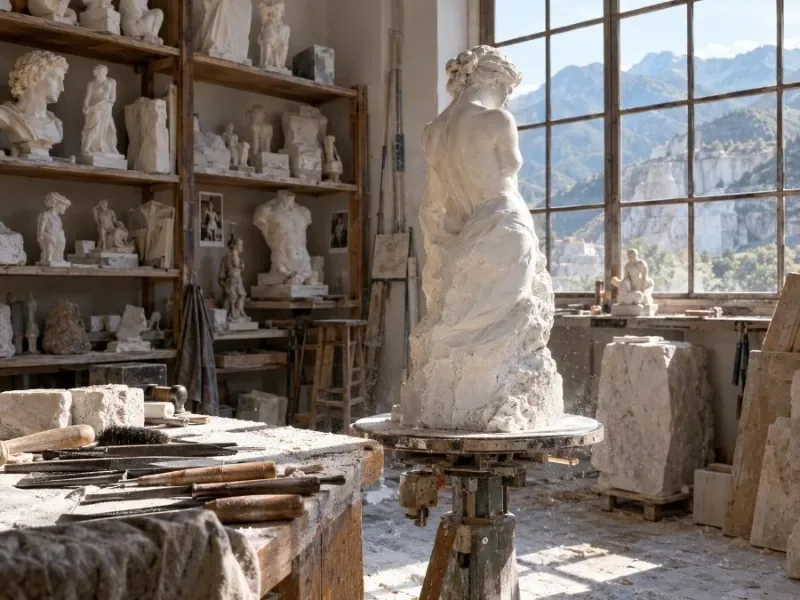
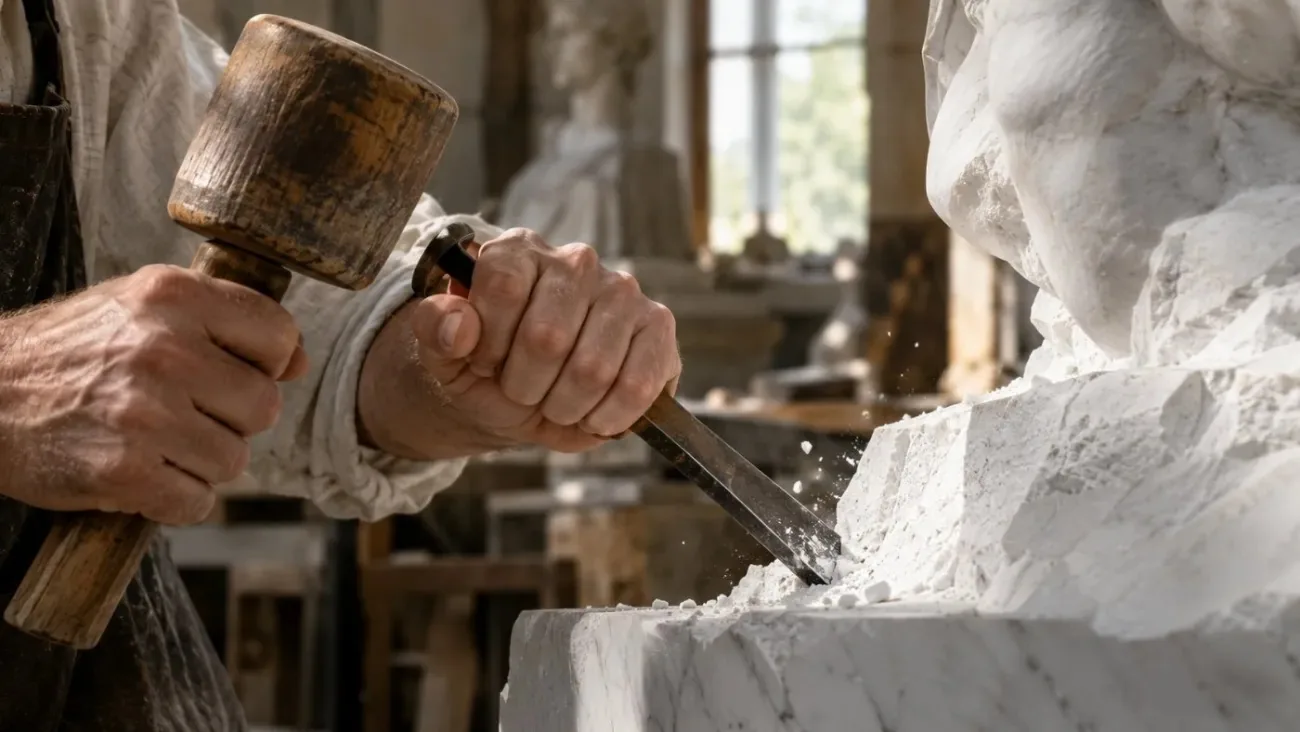
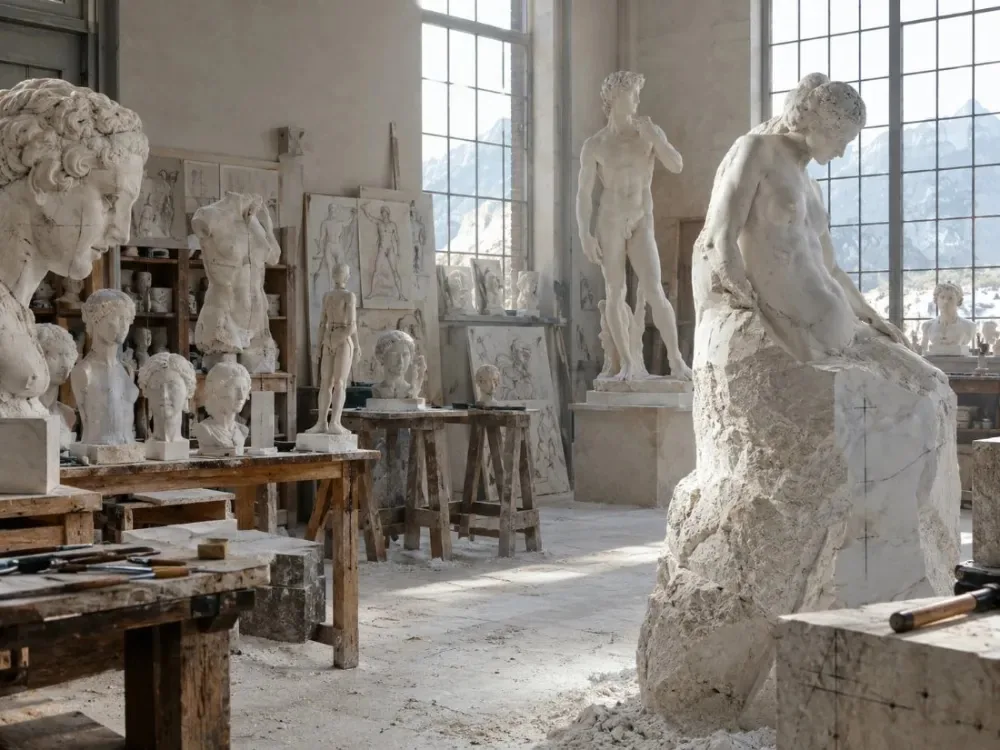
The Polvaccio basin where Michelangelo chose his marble, then working sculpture studios in Carrara.
Explore the quarries and studios tour Tour detailsWas the David carved from Carrara marble?
Yes. A 2005 study by Italy's National Research Council traced the David's stone to the Fantiscritti quarries in the Miseglia basin.
The block was not quarried for Michelangelo. In 1464 Agostino di Duccio was contracted to carve a David for Florence cathedral, and in 1465 he obtained a large block of ordinary white marble from Fantiscritti. He stopped in 1466. Antonio Rossellino tried briefly in 1476. The half-worked block lay in the cathedral yard until Michelangelo signed for it on 16 August 1501.
He started carving on 13 September 1501 and finished in June 1504. The statue stands 5.17 m tall. The CNR study by Attanasio, Platania and Rocchi, published in the Journal of Archaeological Science in 2005, confirmed the Fantiscritti source that 19th-century writers had proposed.
Fantiscritti is where the walk-in jeep tours leave today, and the Miseglia basin is on the route of the off-road tour with lardo.
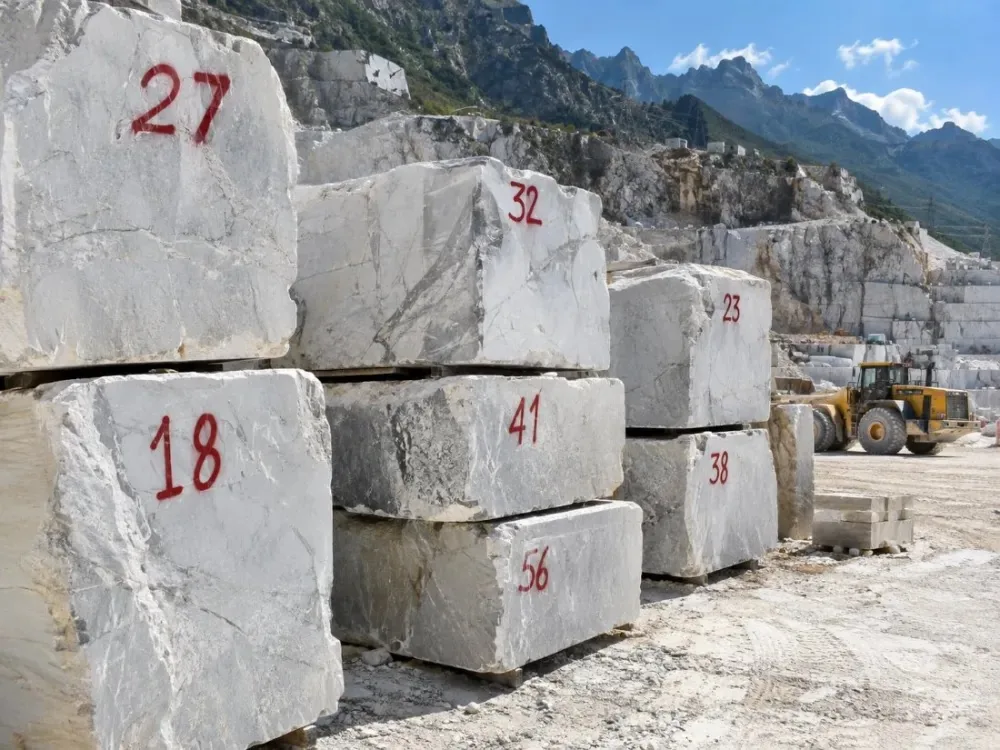
What happened with the tomb of Julius II?
Michelangelo spent eight months in Carrara in 1505 cutting marble for it, then fell out with the pope and with the quarrymen. The Moses is the best-known result.
In 1505 he ordered marble on a huge scale. Galleria Bazzanti records a November contract to ship 34 cartloads to Avenza, and another in December for 60 more. The quarrymen formed a company to meet the order. Then the pope stopped paying. In April 1506 Michelangelo fled Rome for Florence, and the marble sat in St Peter's Square for years.
Relations with Carrara soured. By 1515 he was asking his brother about buying from Pietrasanta instead, and his letters call the quarrymen traitors and worse. In 1516 to 1517 he sued several of them in the Carrara court for broken agreements. Pope Leo X then insisted that marble for San Lorenzo come from Pietrasanta, in Medici territory. Michelangelo kept buying in Carrara anyway.
Quarries near 1,000 m, the quarry Michelangelo selected and a lardo maker, with 8 guests at most.
Check dates for the jeep tour with hotel pickupWhere did Michelangelo live in Carrara?
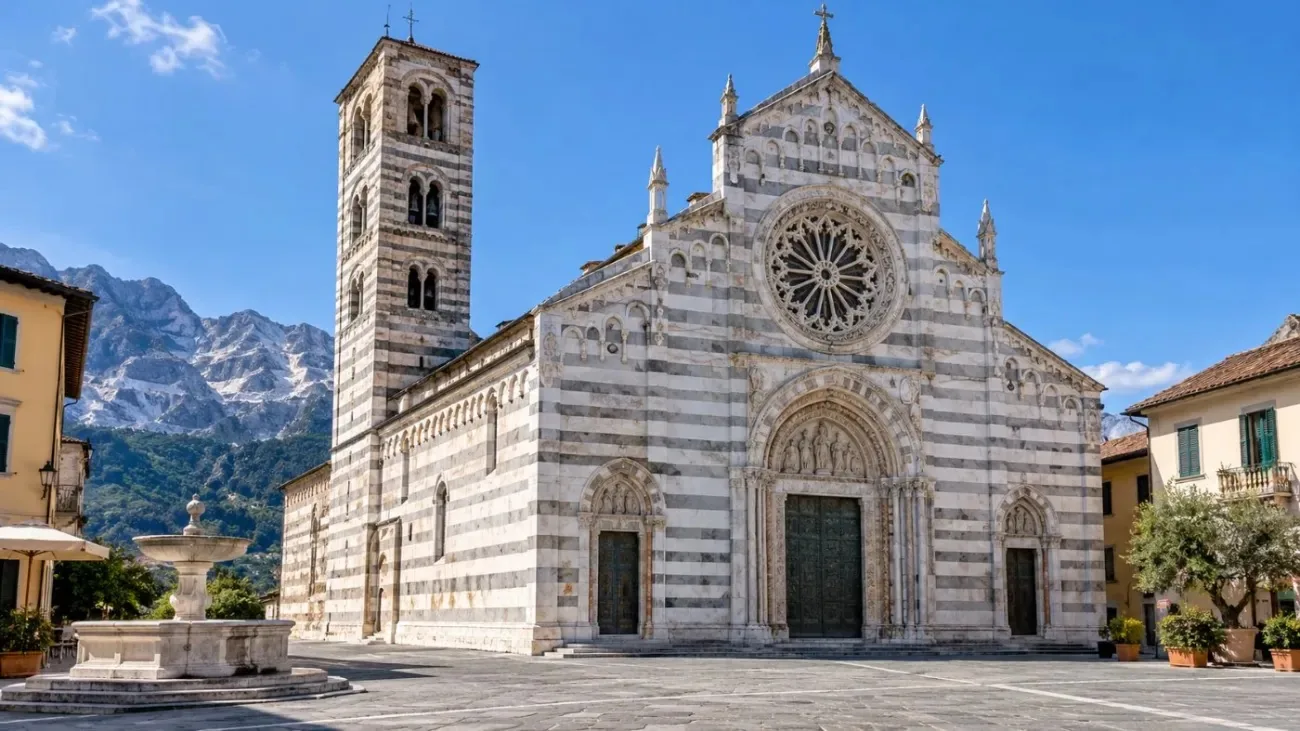
On the cathedral square. A plaque and a bust mark the house at the corner of Piazza Duomo and Via Finelli, where he stayed from September 1516 to August 1517.
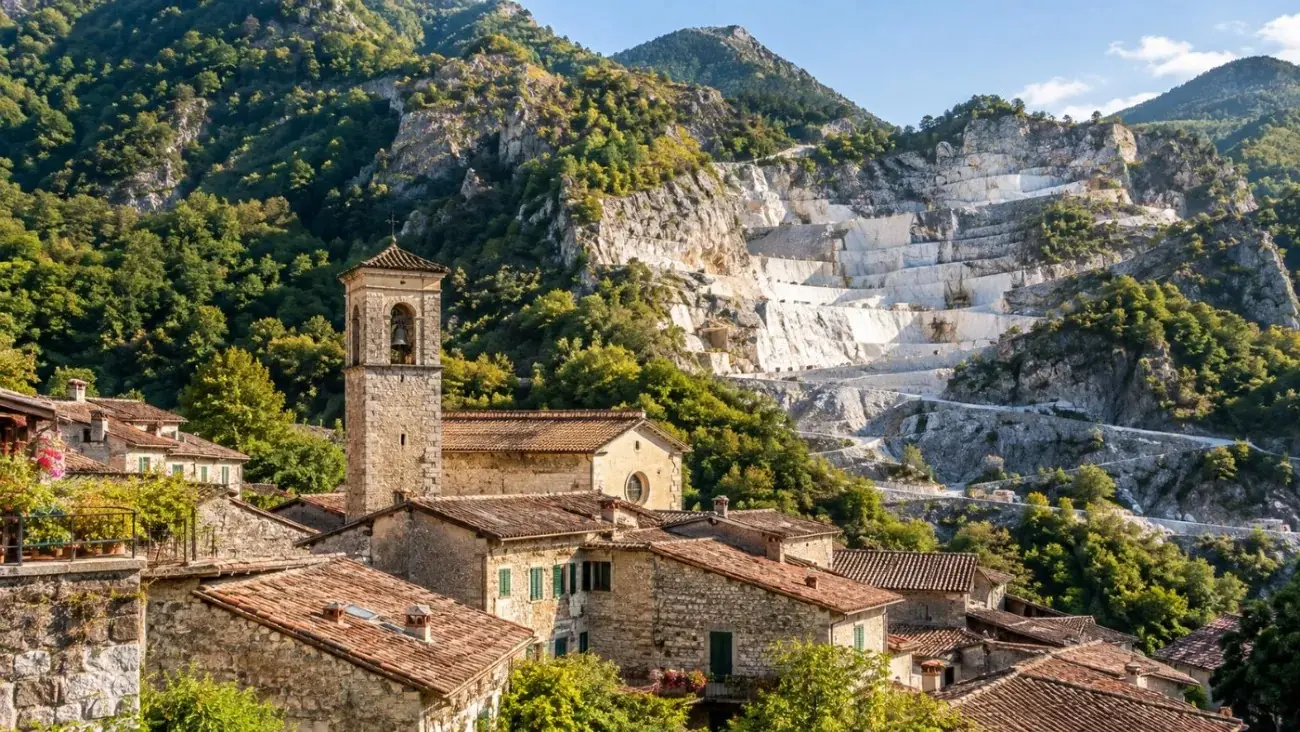
The house is easy to find: stand in front of the striped facade of the Duomo and look to the corner. Visit Tuscany points out the inscription. In the same square, Bartolomeo Bandinelli's unfinished Neptune, known locally as the Gigante, has stood in its fountain since 1563. Bandinelli was Michelangelo's great rival, which makes the pairing more fun.
During that stay Michelangelo also set up a quarry company with Leonardo Cagione. The cathedral itself, Sant'Andrea, is Romanesque with Gothic touches and dates to the 12th century. Ten minutes on foot covers the lot.
Is the CARMI museum open in 2026?
Check before you go. CARMI has announced a temporary closure for building work linked to a new University of Pisa course, with no dates given.
CARMI, the Museo Carrara e Michelangelo, sits in Villa Fabbricotti, Via Sorgnano 42, in the Padula park above town. Its six rooms tell the Michelangelo story with documents from the Massa state archive, holograms and a full-size replica of the Moses. When open, the official hours are:
- 15 September to 31 May: Tuesday to Thursday 9:30 to 12:30; Friday 14:00 to 17:00; weekends 9:30 to 12:30 and 14:00 to 17:00.
- 1 June to 14 September: Tuesday to Sunday 9:30 to 12:30 and 17:00 to 20:00.
- Closed: Mondays, 1 and 6 January, 1 November, 25 and 26 December.
The museum's site shows no ticket price. A directory listed €5 full and €3 reduced in 2023. Email [email protected] before you plan around it. The Museo Civico del Marmo is also closed for renovation. Our museums post has the latest.
Which tours show Michelangelo's quarries?
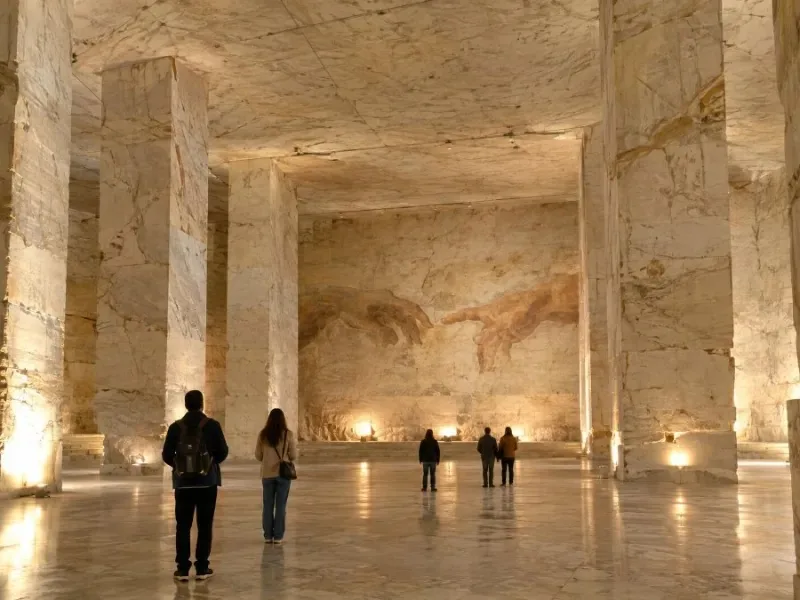
The jeep tour with hotel pickup lists the quarry Michelangelo selected. The studios tour goes to Polvaccio, and the Marble Cathedral tour enters Cava Michelangelo with its Creation of Adam mural.
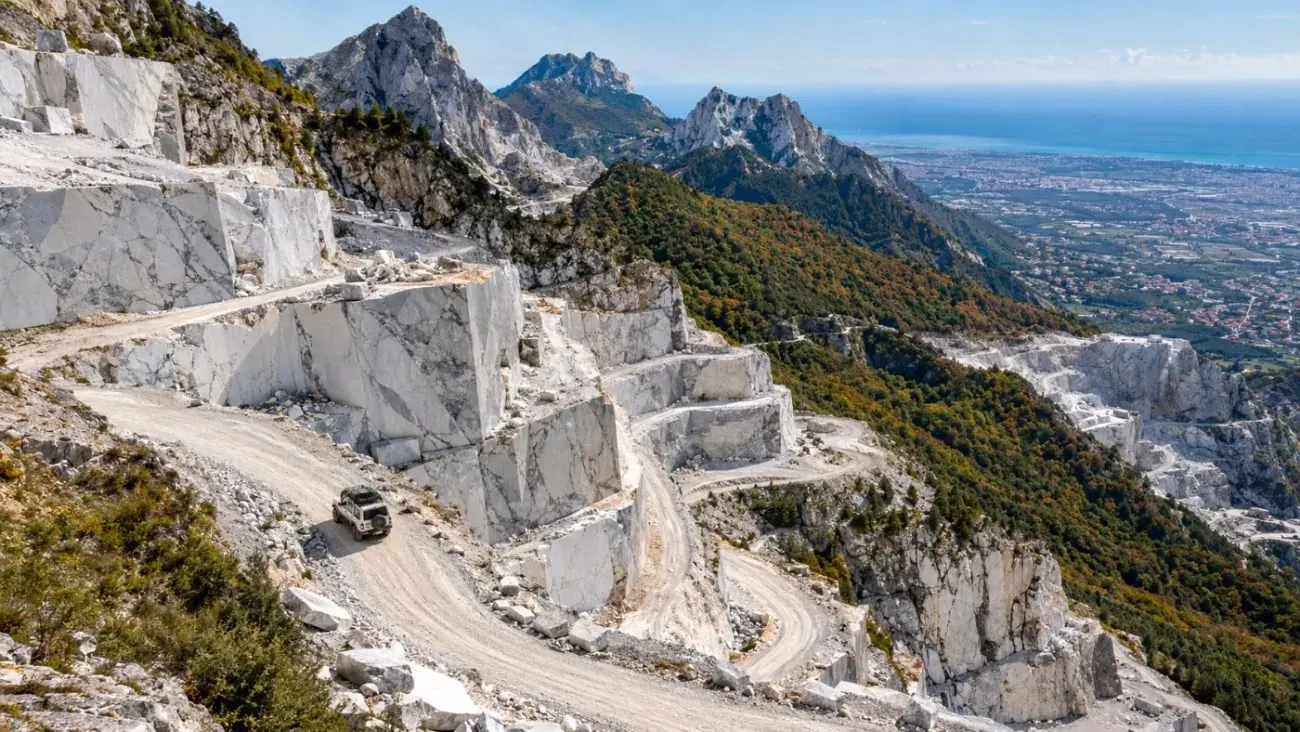
- Jeep tour with hotel pickup: quarries near 1,000 m, the quarry Michelangelo selected, and how extraction changed since Roman times. Max eight guests, in English, Italian or French.
- Quarries and studios tour: the Polvaccio area, then sculptors at work in town.
- Marble Cathedral tour: the underground chamber MarmoTour calls Cava Michelangelo, with Ozmo's 160 m² mural after the Creation of Adam. The name is a tribute: the documented blocks came from Polvaccio and Fantiscritti.
- Walk-in at Fantiscritti: the basin that gave the David's block, €15 at the desk.
Quarry names travel loosely here. Several sites claim Michelangelo, and guides tell the story well. The documents point to Polvaccio for the Pietà and Fantiscritti for the David.
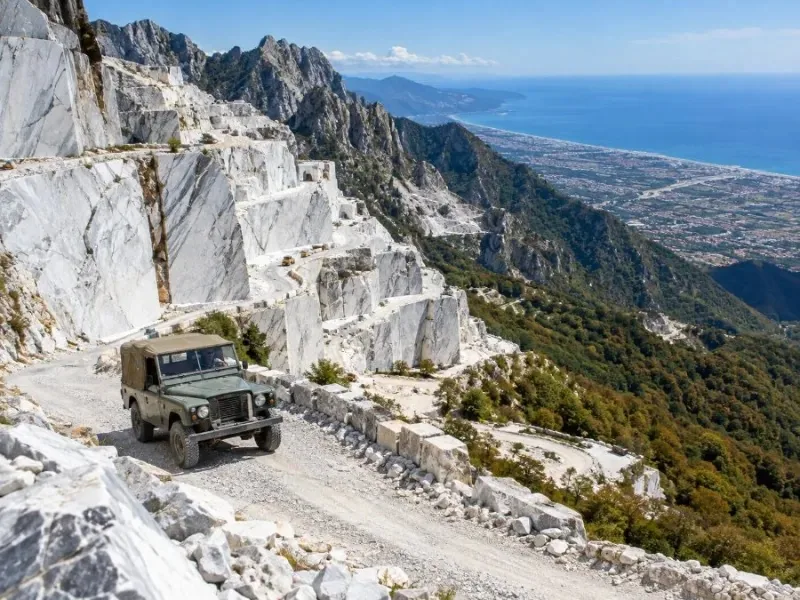
For Michelangelo fans: the quarry he selected, quarries near 1,000 m and a lardo maker, in a group of eight at most.
Explore the jeep tour with hotel pickup Tour detailsFrequently asked questions
Did Michelangelo own a quarry in Carrara?
He co-founded a quarry company with Leonardo Cagione during his 1516 to 1517 stay. He later worked quarries at Pietrasanta too, under Medici pressure.
Is the David made of Carrara marble?
Yes. A 2005 CNR study traced it to the Fantiscritti quarries in the Miseglia basin. The block was first quarried in 1465 for Agostino di Duccio.
Can you visit Michelangelo's house in Carrara?
You can see it from the outside: a plaque and bust mark it at the corner of Piazza Duomo and Via Finelli. It is not a museum.
Is the Moses made of Carrara marble?
It is Apuan marble from the 1505 campaign for the tomb of Julius II, according to the Carrara Marble Tour history.
Ready to book
Choose your tour
Free cancellation up to 24 hours before on every option. Prices are from-prices in USD and move with the season.
Jeep Tour with Lardo and Hotel Pickup
Michelangelo's quarry, a lardo maker and max 8 guests
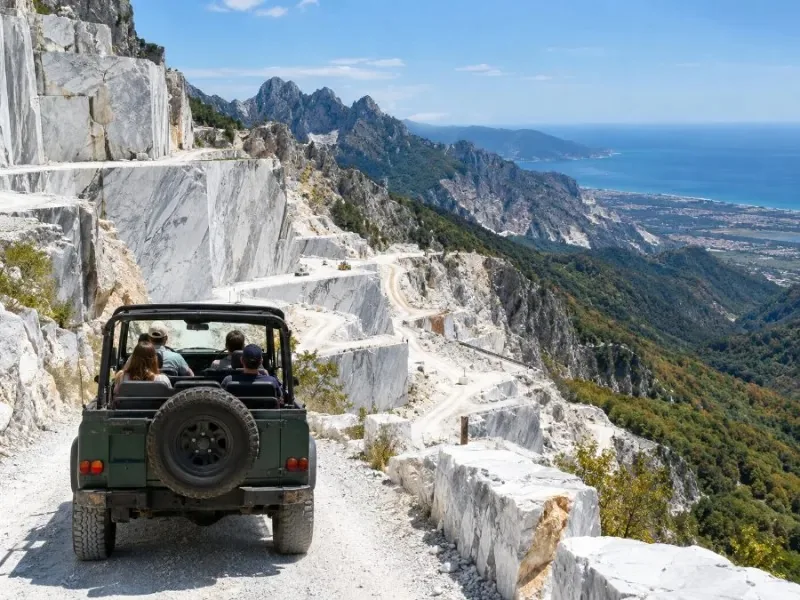
Quarry Off-Road Tour with Lardo Tasting
- Guide on board the off-road vehicle
- Fuel levy
- Lardo di Colonnata tasting at a local bar
Marble Cathedral Tour with Light Lunch
The Marble Cathedral, then lardo, cheese and sgabei