Booking choice: The off-road tour with lardo, from $80 per person. Check dates Tour details
Shop for a marble worktop and you meet three Italian names: Carrara, Calacatta and Statuario. Visit the quarries and you find they come out of the same Apuan deposit, sometimes from neighbouring benches. The differences are geological, and the prices follow.
We lean on the University of Pisa natural history museum and the IUGS heritage stone file for the geology. Where a claim rests on a single design or trade site, we say so.
The quick answer
All three are natural marble from the Carrara area. Bianco Carrara has a grey-white background with soft grey veins and is the most common, so the least expensive. Calacatta has a brighter white ground and bold, irregular veins. Statuario is the purest white with strong dark veins, the most prized grade, selling at up to nearly €10,000 a tonne at the quarry. All marble stains and etches, unlike engineered quartz.
Is Carrara marble real stone?
Yes. It is a natural metamorphic rock: limestone laid down about 200 to 180 million years ago, turned to marble by heat and pressure about 27 to 20 million years ago.
The University of Pisa dates the original limestone to the Early Jurassic, when a shallow carbonate platform covered the area. Mountain building later buried it 15 to 20 km deep at roughly 350 to 450 °C, and the calcite recrystallised into the interlocking grains that make marble. That is why you see "190 million years" on tour: it is the age of the limestone, not of the marble.
The name is simple too. Carrara probably comes from a pre-Roman root, kar, meaning stone, through the Latin carrariae, quarries. A town named after its quarries.
What is the difference between Carrara, Calacatta and Statuario?
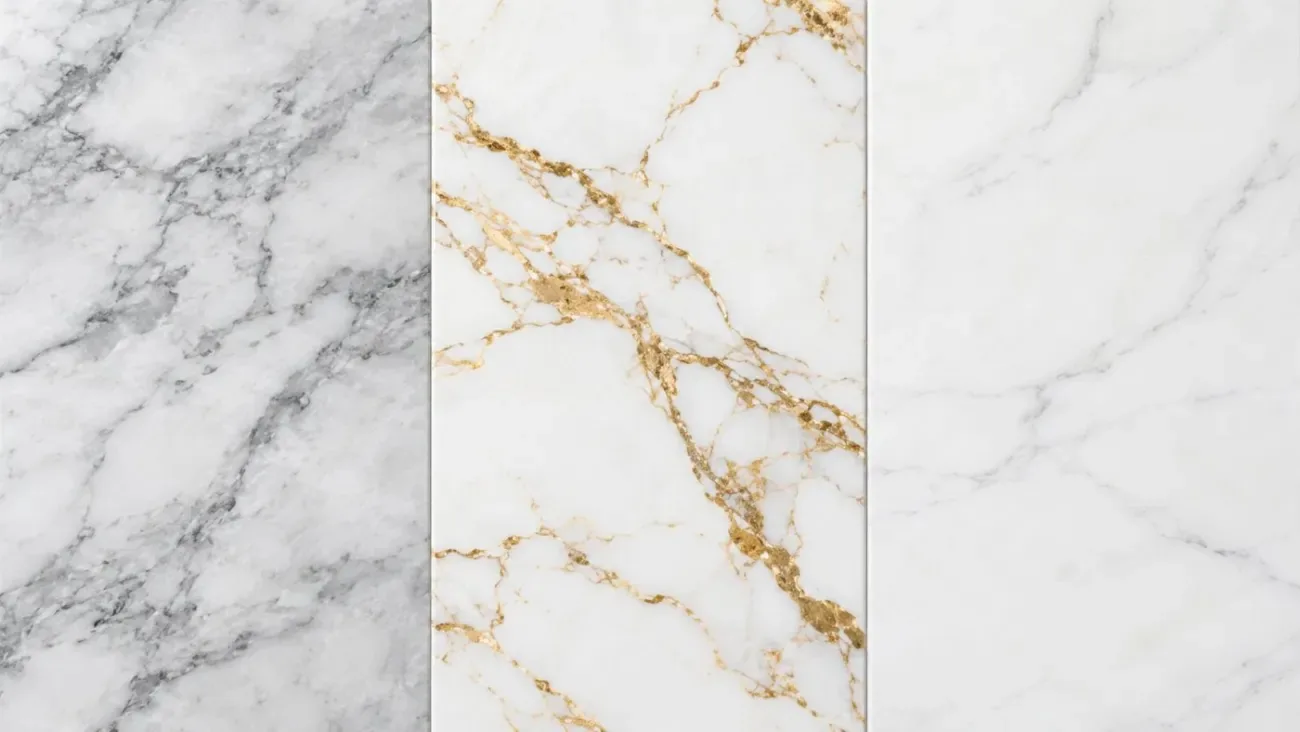
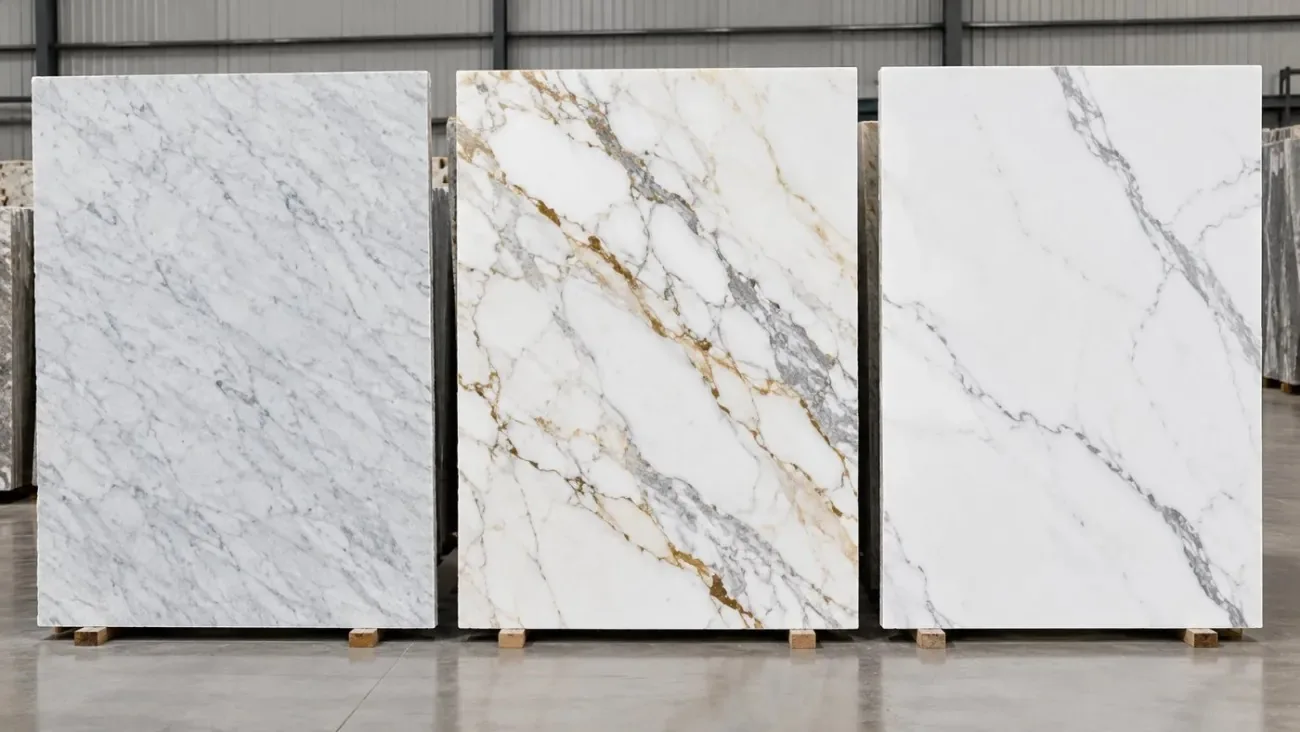
Background and veins. Carrara is grey-white with soft grey veins, Calacatta is bright white with bold veins, Statuario is the purest white with sharp dark veins.
The IUGS lists seven main commercial varieties in the Carrara marble province: Bianco Carrara, Venato, Bardiglio, Nuvolato, Arabescato, Statuario and Calacata (the local spelling). The three famous ones compared:
| Bianco Carrara | Calacatta | Statuario | |
|---|---|---|---|
| Background | Grey-white | Bright white | Purest white |
| Veining | Soft, feathery grey | Bold, irregular, grey to gold | Strong dark-grey |
| Geology | Even marble | Metamorphosed breccia | The purest calcite beds |
| Supply | Most common | Rarer | Scarce, top beds worked out |
| Price | Lowest of the three | High | Highest at the quarry |
Calacatta's drama has a cause. The Pisa museum explains that Calacatta and Arabescato formed from sedimentary breccias, broken rock re-cemented before metamorphism, which gives the irregular veins. Colour comes from trace minerals: pyrite gives grey, limonite yellow, magnetite black. The supply and price rows lean partly on a single design site.
Which is more expensive, and which is rarer?
Statuario sits at the top at the quarry, at up to nearly €10,000 a tonne against about €150 for ordinary marble. Calacatta is rarer and dearer than Bianco Carrara.
The quarry prices come from Il Post: about €150 per tonne for ordinary blocks, close to €10,000 for statuario. Retail slab prices depend on the block, the finish and the importer, and design sites disagree on whether Calacatta or Statuario costs more in the showroom. A heavily figured Calacatta can outprice a plain Statuario.
On rarity, sources clash. Wikipedia calls the prized pure white grade exhausted, and quarry workers told The Dial the finest white was entirely depleted. Yet Statuario is still sold under that name. Read "exhausted" as the legendary historic beds, not the trade grade.
Is Carrara cheap marble? No. Bianco Carrara is the entry point to Italian white marble, not a budget stone.
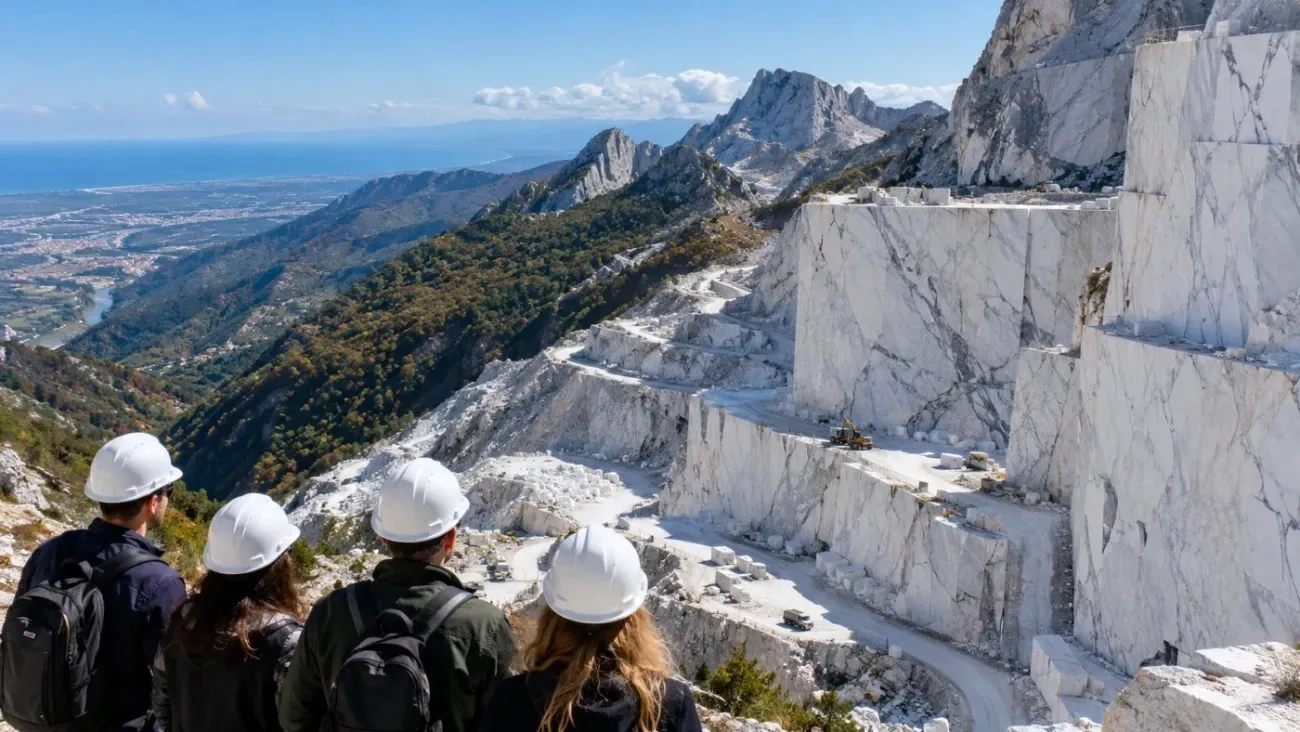
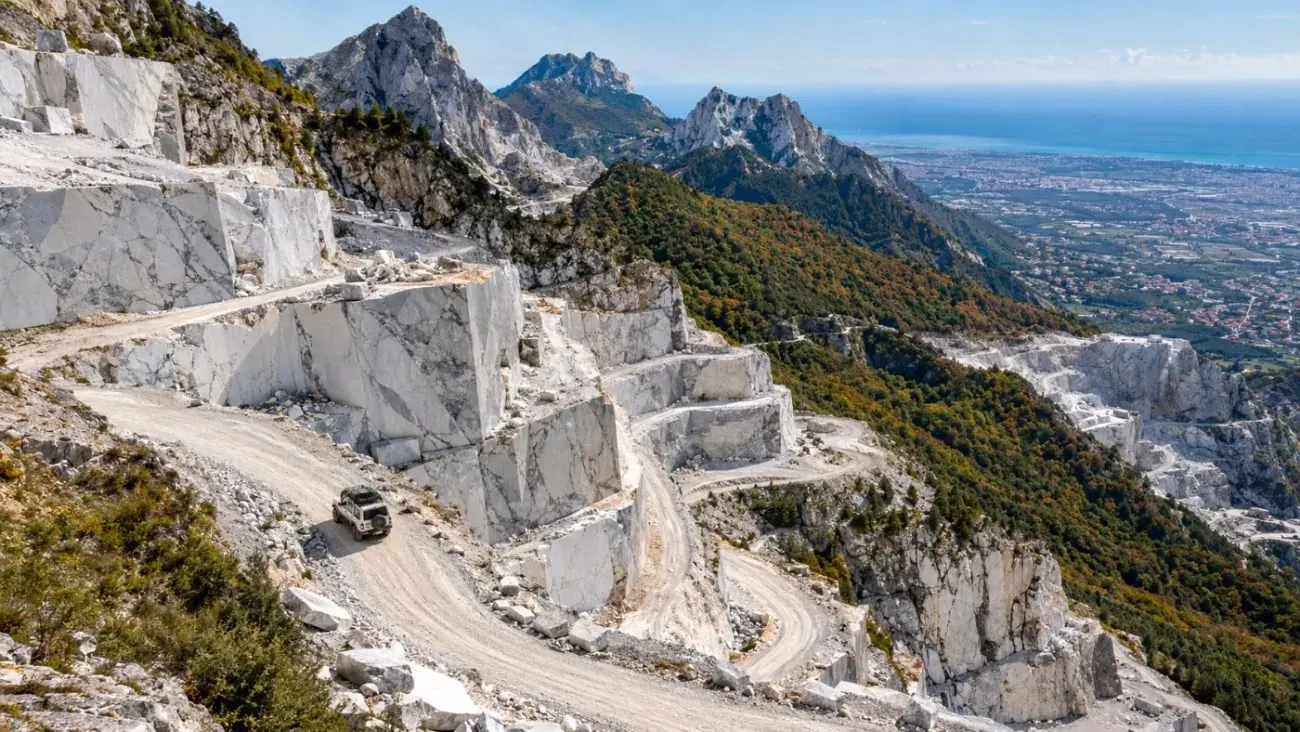
See the grades at the quarry face: three basins and a tunnel quarry, then lardo, in 2.5 hours.
Check dates for the off-road tour with lardoWhat are the disadvantages of Carrara marble?
It is porous, so it stains, and its calcite reacts with acid, so lemon, vinegar and wine leave dull etch marks. It needs sealing and some patience.
- Stains: oil, coffee and red wine soak in. A sealer slows that down; it doesn't stop it.
- Etching: acid dissolves calcite. A ring from a lemon slice is a chemical mark, not a stain, and sealer doesn't prevent it.
- Scratches: marble is softer than granite or quartz.
- Weather: outdoors, acid rain and pollution eat at the polish over decades.
Many Italians shrug at all this. A kitchen counter of Bianco Carrara picks up a patina, and people who choose it usually like that. If you want it to look new forever, buy something else.
Is quartz better than Carrara marble?
For a busy kitchen, quartz is easier: it doesn't stain, etch or need sealing. Marble is natural, handles heat better and ages instead of staying the same.
Engineered quartz is about 90 to 94% crushed stone bound with resin. A home-improvement comparison from Bob Vila gives marble a need for resealing about every six months, and says it tolerates heat better than quartz, whose resin can scorch.
The honest split: quartz for low maintenance, marble for the real thing. If you want the Carrara look on a budget, quartz does a fair impression. If you want stone the Romans cut, there is only one source.
Who produces the most marble in the world?
China, then India, Turkey, Brazil and Iran, for natural stone as a whole. Italy ranked fifth in stone exports by weight in 2021, but first in value per tonne.
Global statistics lump marble with other stone. The trade analyst Carlo Montani put the 2020 "Big Five" in production as China, India, Turkey, Brazil and Iran, and found China, India and Turkey together dig more than two thirds of world output, as Stone-Ideas reports. Italy exported 2.3 million tonnes in 2021, fifth, but earns the highest price per tonne for processed stone.
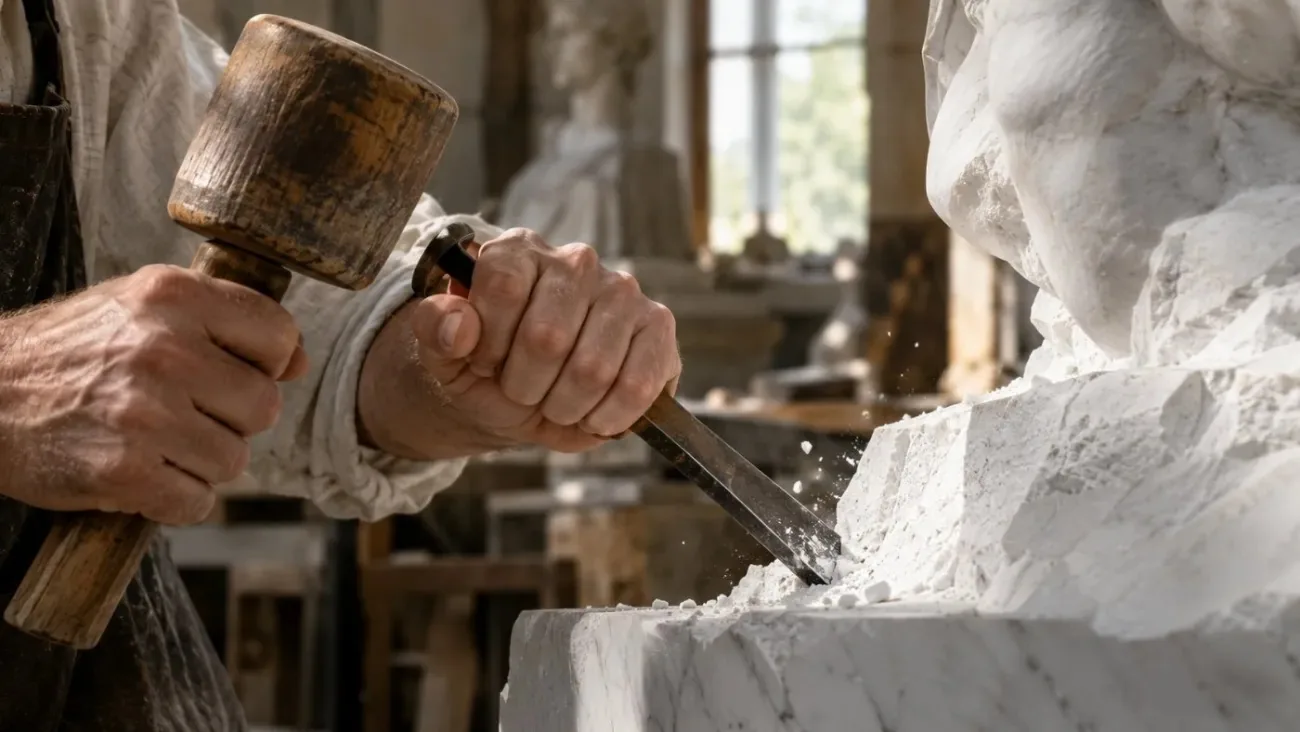
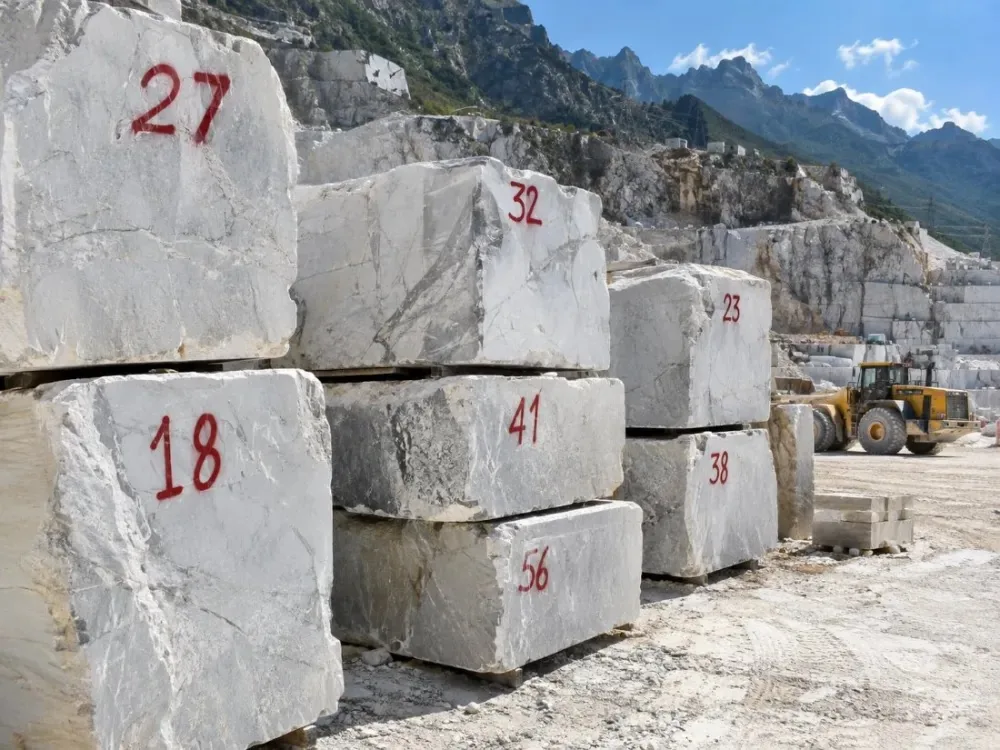
Carrara itself turns out somewhere between 3 and 5 million tonnes a year, depending on the source. Most of it is not slabs. About 75% is ground into calcium carbonate powder for industry, about 20% becomes slabs and tiles, and roughly 1% goes to sculpture, Il Post reported.
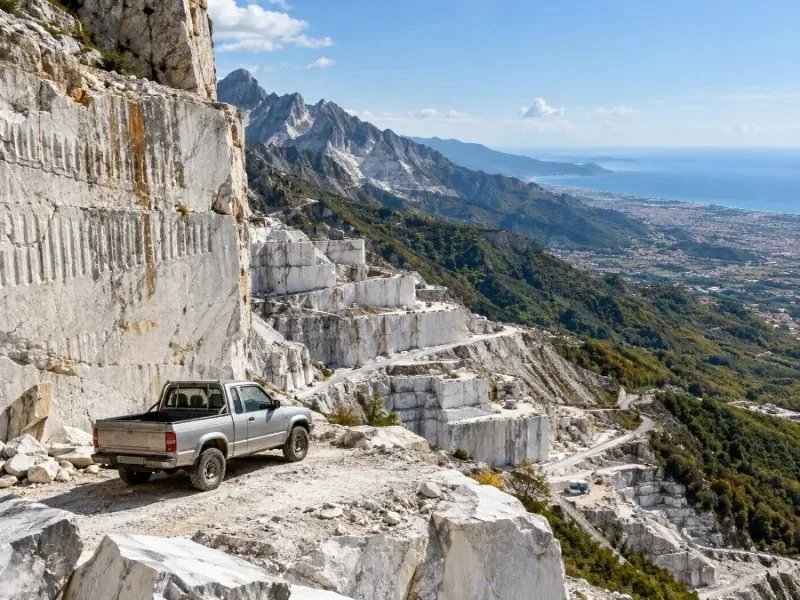
A third-generation quarryman as guide, quarry 177 and a high bench with a sea view, six guests at most.
Explore the small-group 4x4 Tour detailsHow much marble is left in Carrara?
Nobody publishes an official figure. About half of the 650-odd historic quarry sites are worked out or abandoned; the rest are still cut every working day.
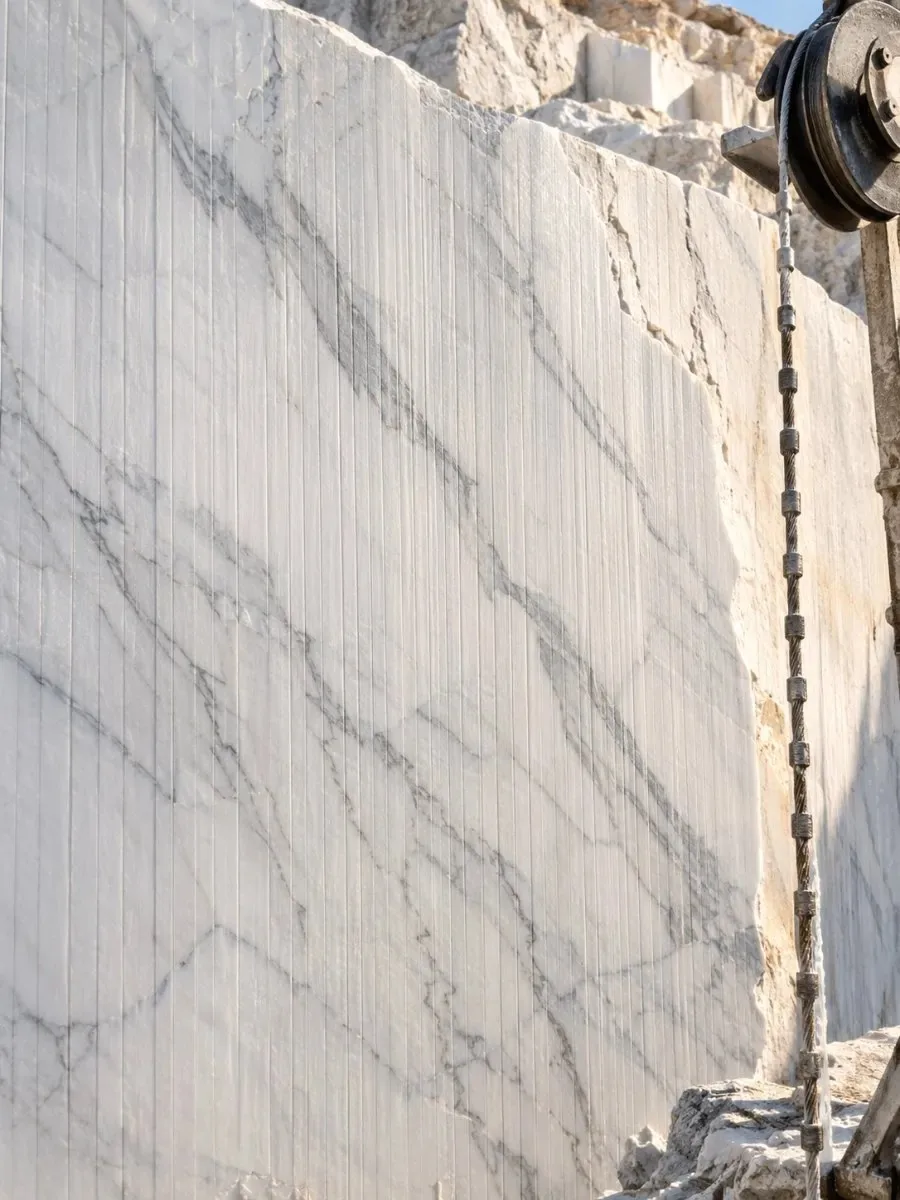
Quarry workers quoted by The Dial guessed the remaining quarries could be emptied within 50 years. That is a guess, not a survey. More marble has been taken out in the last 30 years than in the previous two thousand, according to the same reporting, because diamond wire and heavy machinery changed the pace.
The cost is visible. Marble slurry, called marmettola, clouds rivers and groundwater, and quarries reach 1,600 m in places despite a legal limit of 1,200 m, Il Post found. In August 2026 the comune began work on a "Marmo di Carrara" mark for origin and quality. Campaigners such as No Cav want the quarries closed; the industry association opposes closure. A tour is a good place to ask your guide which side they're on.
Can you see the different marbles on a tour?
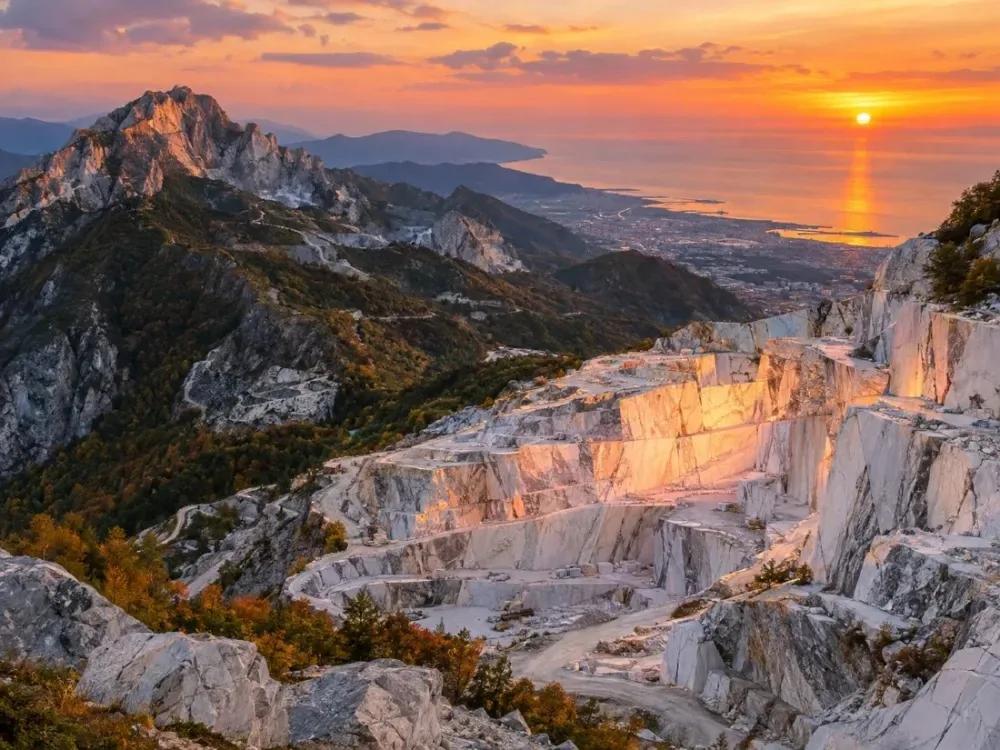
Yes. Guides point out the grades on the cut faces and in the yards, and the van day trip promises to show how to tell real Carrara marble from fake.
On the cut walls you see the grades side by side: grey-veined Bianco on one bench, a whiter band above, a vein of breccia across a gallery roof. The off-road tour with lardo crosses all three basins, which is the widest sample. The van day trip lists a lesson on telling real Carrara marble from imitations, which is useful before you buy anything in town.
Carrara's marble library, the Marmoteca of about 310 samples at the Museo Civico del Marmo, is closed for renovation. For the history of the stone in sculpture, read our Michelangelo guide.

From Lucca, Pisa or La Spezia: a working underground quarry with a hard hat, a lesson in spotting fake marble, and Colonnata.
Explore the day trip from Lucca or Pisa Tour detailsFrequently asked questions
What does Carrara mean in Italian?
Probably "quarries": from the Latin carrariae, itself from a pre-Roman root kar, meaning stone.
Is Carrara marble high end?
It is a premium natural stone, but Bianco Carrara is the most available Italian white. The luxury grades are Statuario and Calacatta.
What is the most famous Italian marble?
Carrara marble, and above all Statuario, which the University of Pisa calls the most famous and prized variety.
Why is Carrara marble so special?
The best white grades hold fine detail and take a high polish, and the deposit has been worked for over 2,000 years. The IUGS named it a Global Heritage Stone Resource in 2017.
Ready to book
Choose your tour
Free cancellation up to 24 hours before on every option. Prices are from-prices in USD and move with the season.
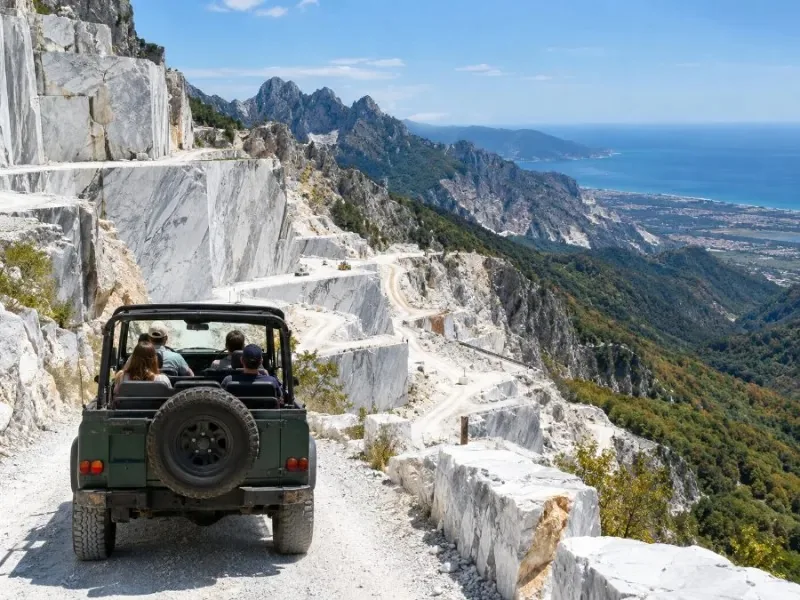
Quarry Off-Road Tour with Lardo Tasting
- Guide on board the off-road vehicle
- Fuel levy
- Lardo di Colonnata tasting at a local bar
Small-Group 4x4 into the Colonnata Basin
- 4x4 from Carrara and back
- Quarry entrance and guide
- Lardo tasting
Carrara Day Trip from Lucca, Pisa or La Spezia
A working underground quarry plus free time in Colonnata