Booking choice: The small-group 4x4, from $115 per person. Check dates Tour details
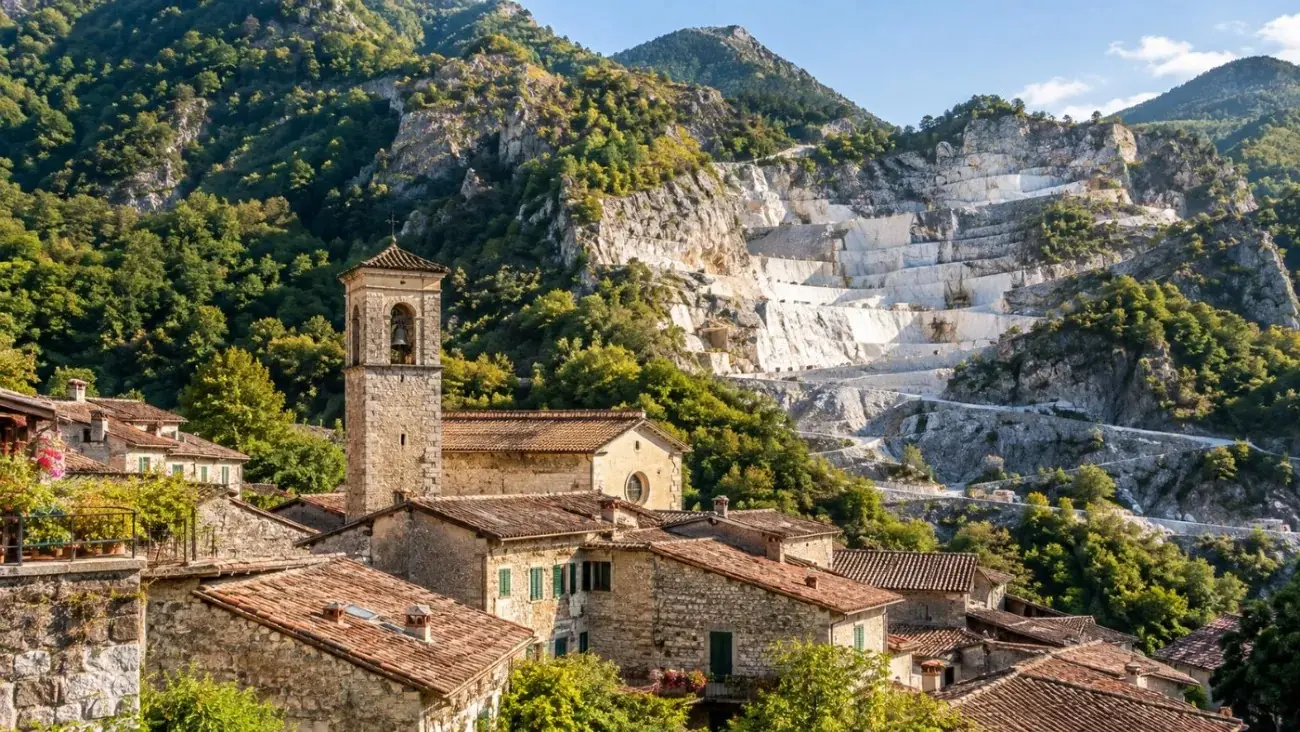
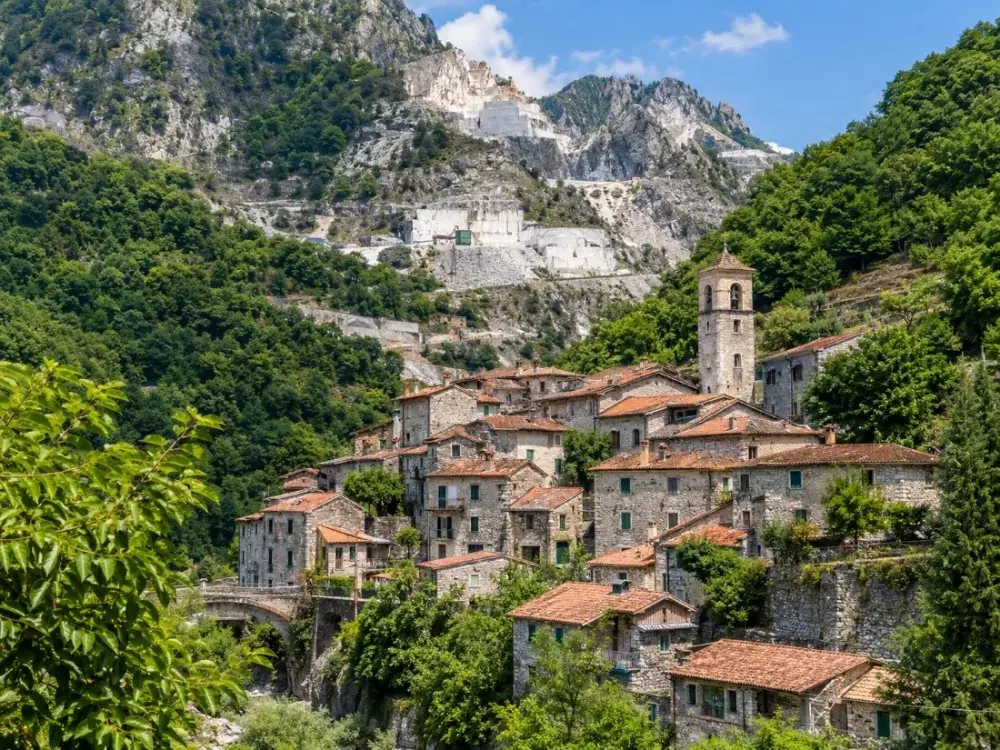
Colonnata is a hamlet of Carrara at 532 m, 8 km up the valley from the town. It was founded around 40 BC to house the slaves who worked the Roman quarries, and quarrying shaped it ever since. A little over 200 people live there now, against more than a thousand in the early 1900s, Finestre sull'Arte reports.
Most visitors come for two things: the white basin above the village and the cured pork fat that made its name. This guide covers both, plus the Roman quarry on the way up.
The quick answer
Colonnata is a quarry village 13 minutes' drive above Carrara. Lardo di Colonnata is pork back fat cured for at least six months in marble basins with salt, garlic, pepper and rosemary, protected as an IGP since 2004. Most quarry tours end with a tasting here. The lardo festival is usually in late August. On the way up, the free Roman quarry at Fossacava opens on booking.
What is Colonnata?
A hamlet of Carrara at 532 m, founded around 40 BC for quarry slaves, with marble-paved squares, a 16th-century church and a monument to the quarryman.
It is small. Five minutes covers Piazza Palestro, where a plaque remembers the anarchists, the church of San Bartolomeo (first recorded in the 12th century, rebuilt in the 16th), and Alberto Sparapani's Monumento al Cavatore from 1983. The rest is lanes, larderie and views straight into the quarries.
From Carrara it is 8 km by road, about 13 minutes without traffic, through Bedizzano. Visit Tuscany suggests stopping at La Piana and Calagio on the way for views over the basin. Parking in the village is tight; on summer weekends arrive before 11:00.
What is lardo di Colonnata?
Pork back fat cured in marble basins with salt and herbs. It has been a protected geographical indication (IGP) since 26 October 2004.
It was quarrymen's food: cheap, filling fat that kept for months and went up the mountain with bread and tomato. Now it is a delicacy with an EU-protected name, registered by Commission Regulation (EC) No 1856/2004. Only lardo made in Colonnata to the rules can carry it.
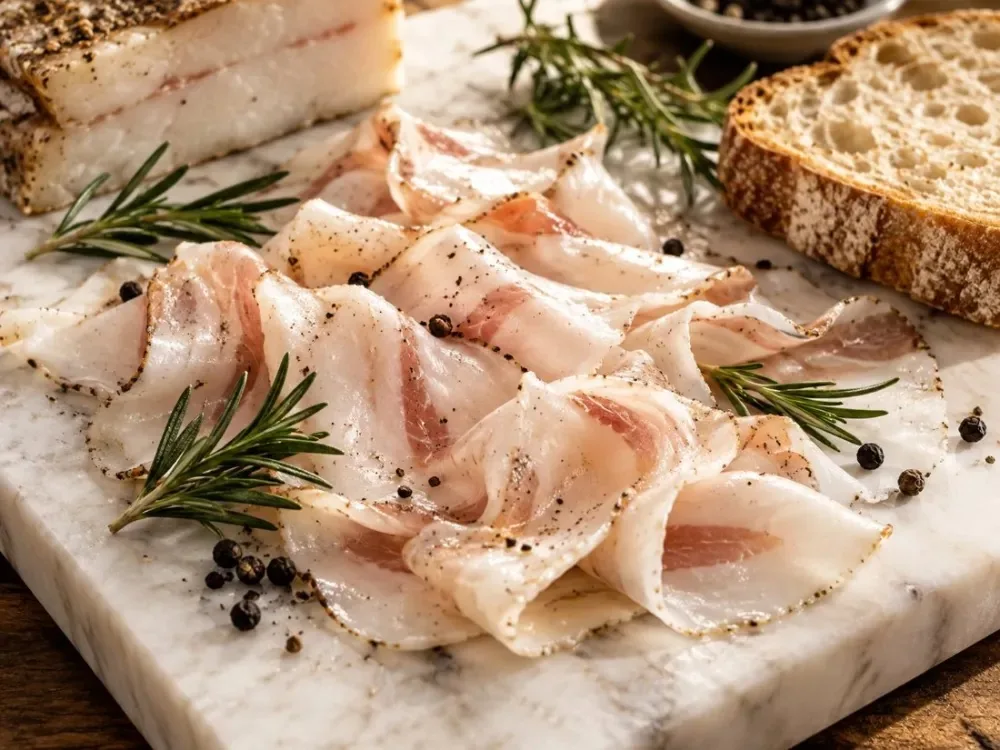
The finished piece is a rectangle at least 3 cm thick, rind underneath, top dark with salt and herbs. Inside it is white with a faint pink tinge. Sliced thin, it melts on warm bread. People expect it to taste salty. Good lardo tastes sweet.
How is lardo di Colonnata made?
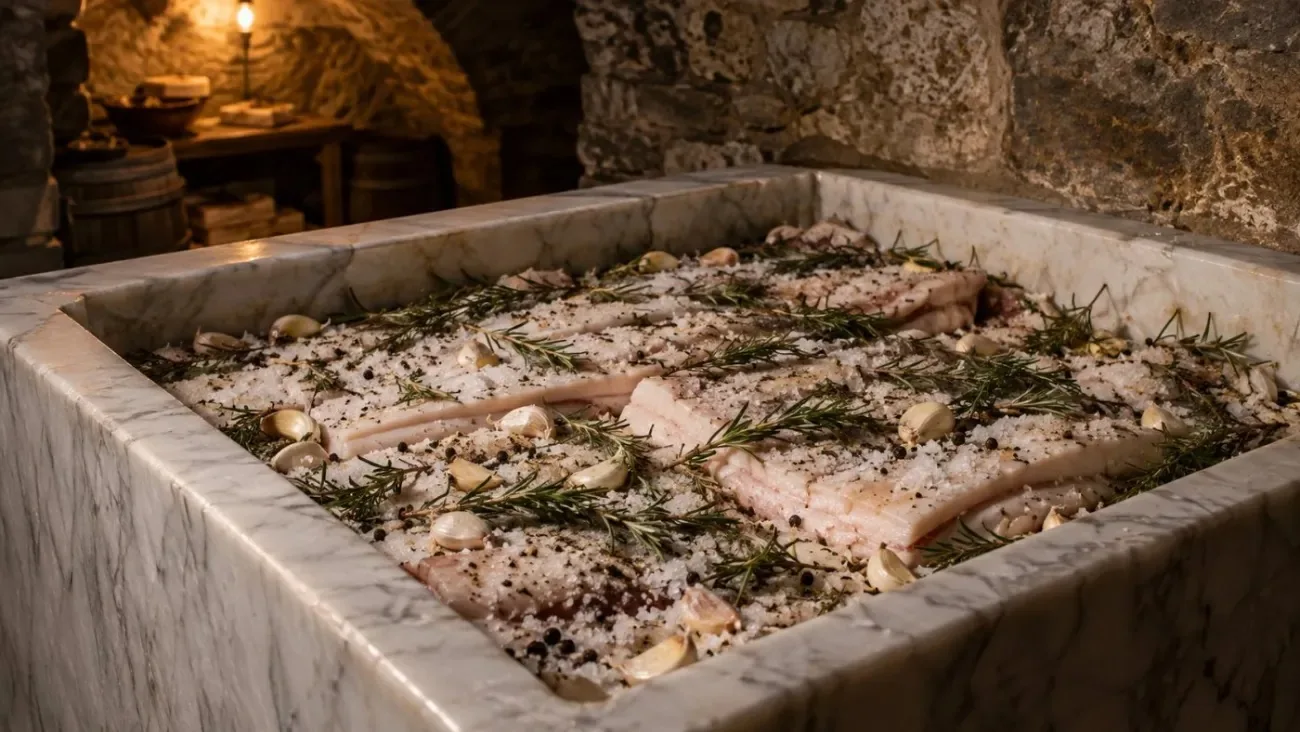
Fresh back fat goes into garlic-rubbed marble basins within 72 hours of slaughter, layered with salt, pepper, rosemary and garlic, and ages for at least six months.
The EU specification sets the method step by step:
- Season: production runs from September to May.
- The fat: trimmed and salted, then in the basins within 72 hours of slaughter.
- The basins: called conche, carved from white marble from the Canaloni beds of Colonnata and rubbed with garlic first.
- The layers: fat alternates with pepper, rosemary and garlic. Producers add their own touches, from sage to cinnamon.
- The wait: at least six months, in poorly ventilated rooms with no air-conditioning.
Why marble? It keeps a steady temperature and lets the brine work evenly. Larderie in the village sell their lardo direct, and the jeep tour with hotel pickup includes a visit to a lard factory.
A guide from a quarrying family, quarry 177 and a lardo tasting in Colonnata, with six guests at most.
Check dates for the small-group 4x4How should you eat lardo, and what if you don't?
Thin, at room temperature, on warm bread or toast. If pork fat is not for you, say so when you book: no tour listing mentions an alternative.
- Temperature: cold lardo is waxy. Let it sit a few minutes and it turns translucent.
- Bread: warm bread or bruschetta. On the coast it comes with sgabei, strips of fried bread dough from Lunigiana.
- Portion: a tasting is a few slices. Have lunch after.
- Taking it home: village shops sell vacuum-packed pieces. Check your own country's rules on bringing in meat before you buy.
Vegetarians and anyone avoiding pork should tell the operator in advance. The Marble Cathedral tour serves cheese and sgabei alongside the lardo, which gives you more to work with.
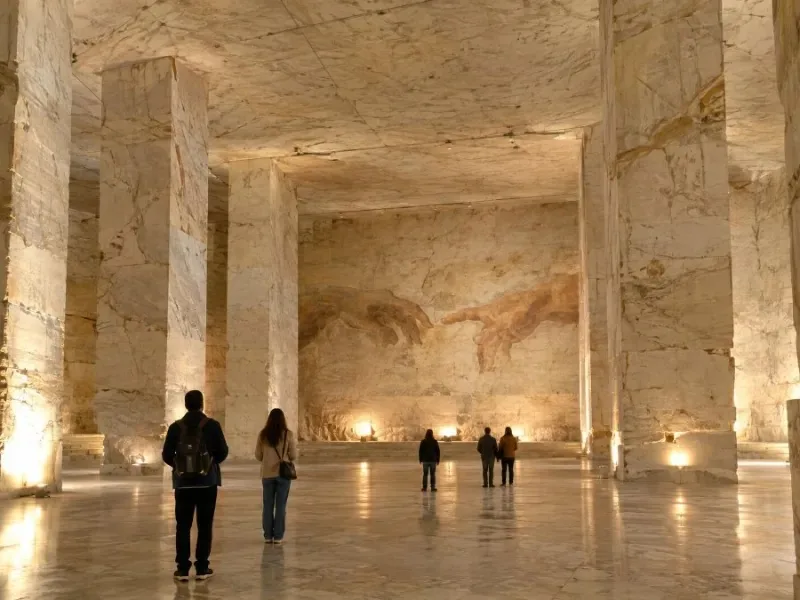
The fullest tasting on offer: lardo IGP, cold cuts, cheese and sgabei, after the underground Cathedral of Marble.
Explore the Marble Cathedral tour Tour detailsWhat is the Colonnata quarry basin?
The easternmost of Carrara's three basins, worked since Roman times. Quarry 177, still active, is one of the oldest.
Carrara's marble is usually split into three basins: Torano, Miseglia (Fantiscritti) and Colonnata. The UNESCO Tentative List entry counts about 30 quarries from the Roman period and describes a large Roman quarry near Colonnata as possibly the biggest of its kind in Italy, or even the world.
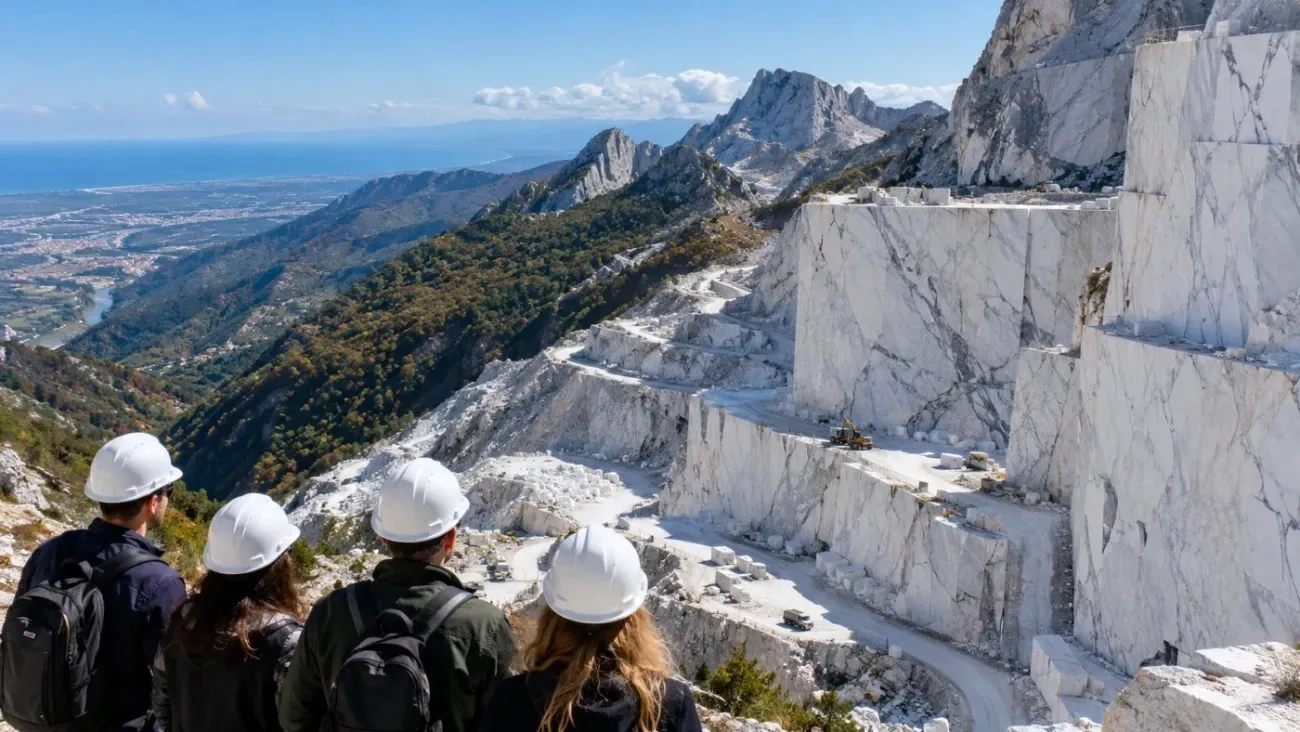
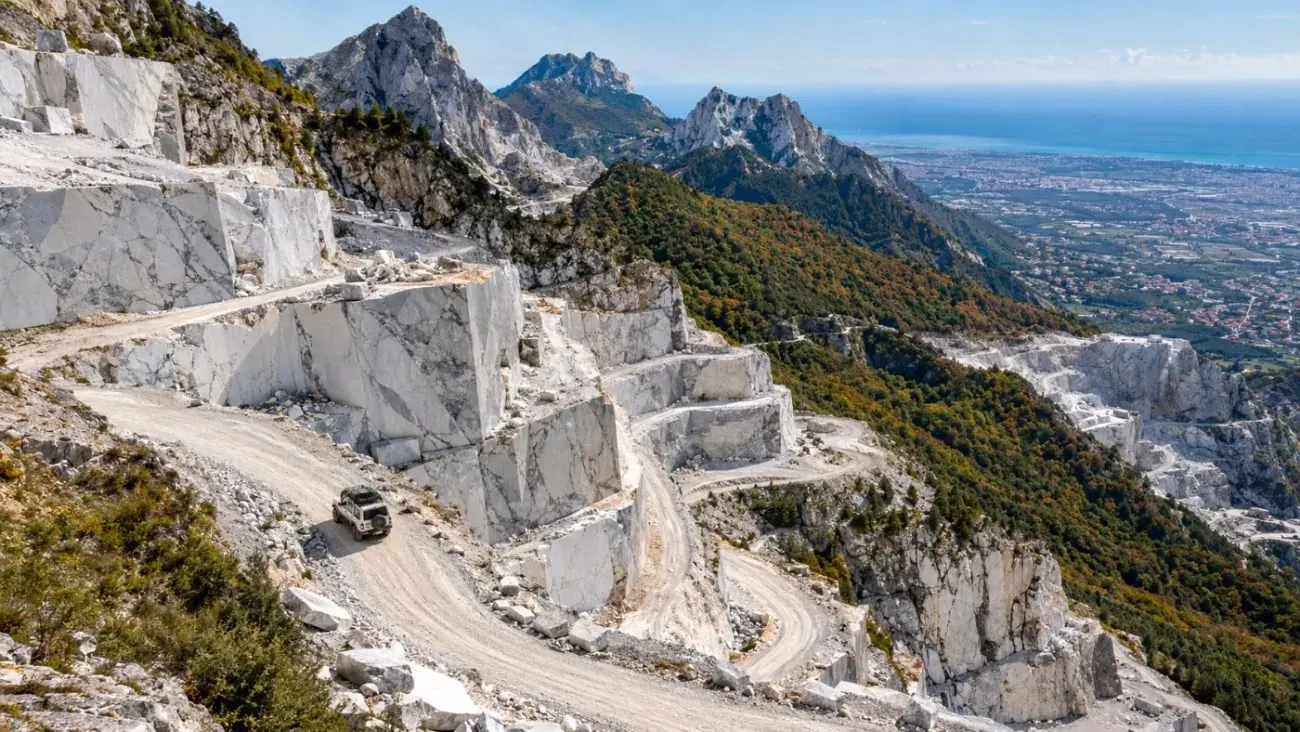
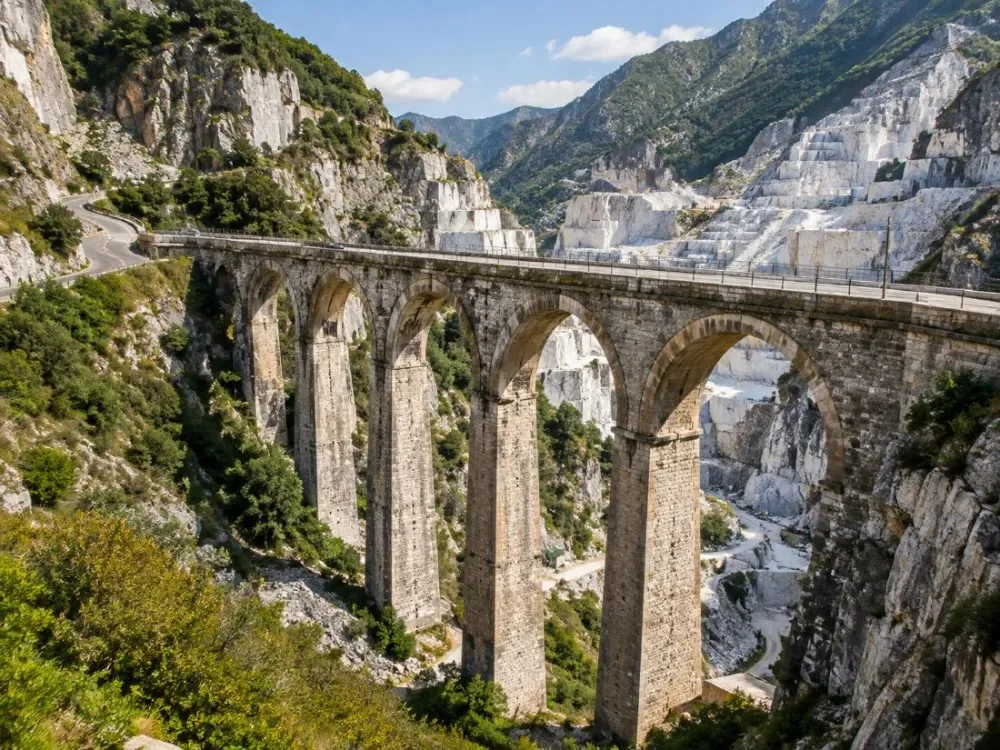
Today the basin is a working landscape of benches, haul roads and spoil slopes. The small-group 4x4 goes into quarry 177, which the listing says has been worked since Roman times, then along the route of the old marble railway past the Ponti di Vara and up to a high quarry with a sea view. The listing describes the guide as a third-generation quarryman.
Can you visit Fossacava on the way to Colonnata?
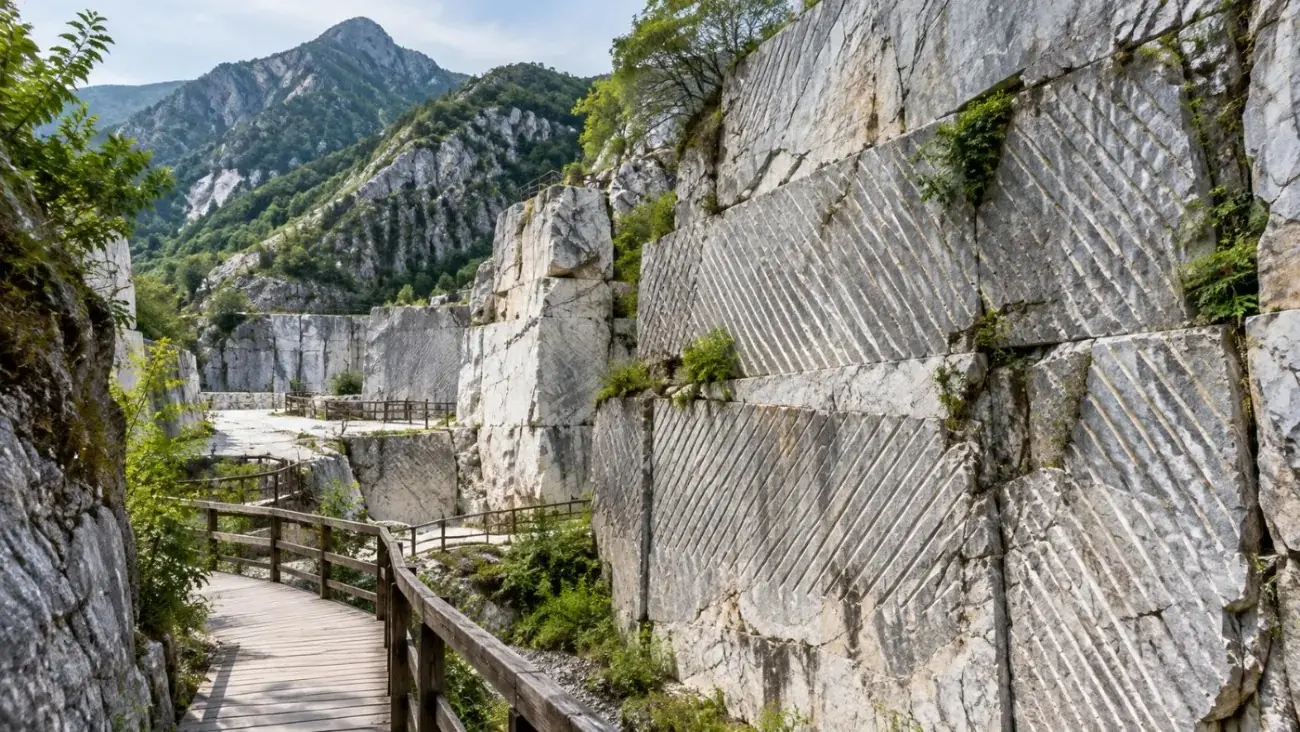
Yes. The Roman quarry at Fossacava lies on the Colonnata road, is free and needs booking.
It is a 1st-century Roman quarry with walkways and signs in Italian and English, a few kilometres below the village. In October 2026 it opens Friday to Sunday from 10:00 to 14:00, and in November and December on weekends from 10:00 to 13:00. Book at [email protected] or +39 335 1047436. The full 2026 timetable is on Visit Tuscany.
Look for the tool marks. Roman quarrymen cut channels by hand and split blocks with wedges, and the lines are still crisp. Our visiting guide has the other free and paid ways in.
When is the lardo festival in Colonnata?
Usually in late August, in Piazza Palestro. The 2026 dates were not published when we checked.
The Sagra del Lardo, also called the Festa del Lardo, fills the village square for a few days each August, Finestre sull'Arte notes. The 2019 edition ran from 22 to 25 August, according to Eventi e Sagre. Expect long tables, lardo in every form and a crowd that outnumbers the residents many times over.
Check the comune of Carrara or local press in July for the year's dates. If you go, take a tour or a taxi up: the village road is narrow and parking runs out early.
A Defender into the Colonnata valley, an underground quarry and lardo IGP on the way back.
Check dates for the Colonnata jeep tourWhich tours end in Colonnata?
Most of them. The small-group 4x4, the Marble Cathedral tour, the e-bike tour and the van day trip all stop in the village; others serve lardo nearby.
- Small-group 4x4: quarry 177, the marble railway, then lardo in Colonnata. Two hours.
- Off-road tour with lardo: the route runs through the Colonnata basin, with lardo at a local bar.
- Marble Cathedral tour: a walk through the village after the tasting.
- E-bike tour: vineyards, quarry roads, then Colonnata. Check whether the tasting is included.
- Van day trip: free time in the village, so you can eat lunch there.
For the longest time in the village, the van wins. For the best quarry access with lardo at the end, take the small-group 4x4.
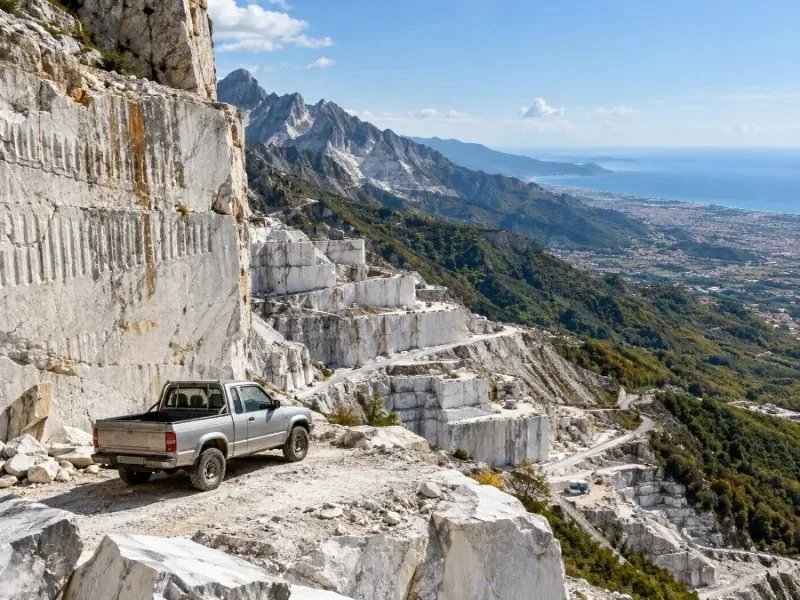
Our pick for Colonnata: quarry 177, the old marble railway and a high viewpoint, then lardo in the village.
Explore the small-group 4x4 Tour detailsFrequently asked questions
Is lardo di Colonnata raw?
It is cured, not cooked: salted and aged for at least six months in marble basins. It is eaten as it is, sliced thin.
Can you get to Colonnata without a car?
Yes, by local bus or taxi from Carrara, or on a tour. We could not verify the current bus line number, so check with Autolinee Toscane.
Can you visit a lardo maker?
Larderie in the village sell direct, and the jeep tour with hotel pickup includes a visit to a lard factory, where you see how it is made.
What does IGP mean on lardo?
Indicazione Geografica Protetta, the EU's protected geographical indication. Lardo di Colonnata has held it since 2004.
Ready to book
Choose your tour
Free cancellation up to 24 hours before on every option. Prices are from-prices in USD and move with the season.
Small-Group 4x4 into the Colonnata Basin
- 4x4 from Carrara and back
- Quarry entrance and guide
- Lardo tasting
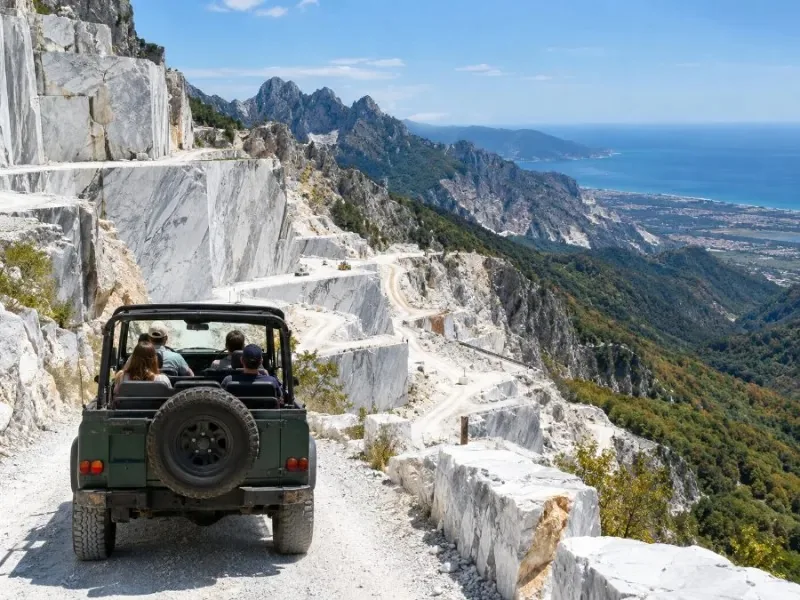
Quarry Off-Road Tour with Lardo Tasting
- Guide on board the off-road vehicle
- Fuel levy
- Lardo di Colonnata tasting at a local bar
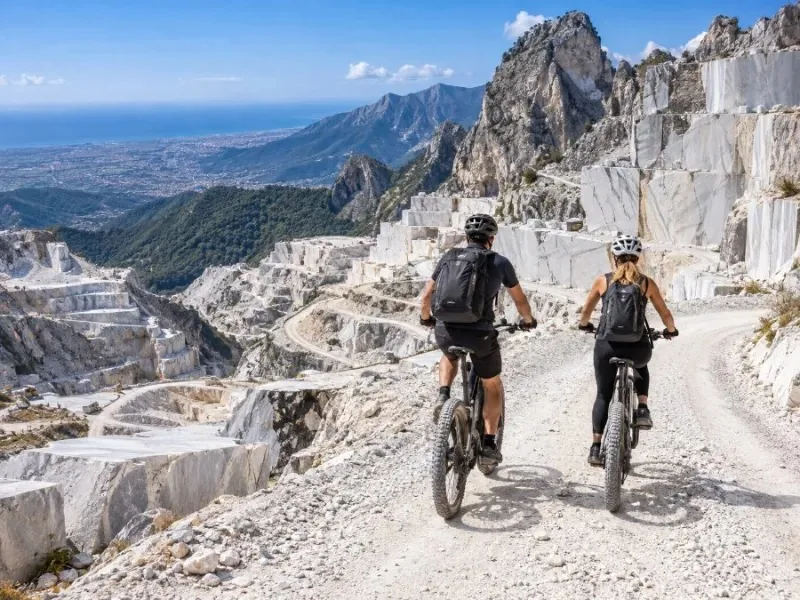
E-Bike Tour to the Marble Quarries
Vineyards, quarry roads and Colonnata under your own power